Why Are Patio Slabs Cracking?
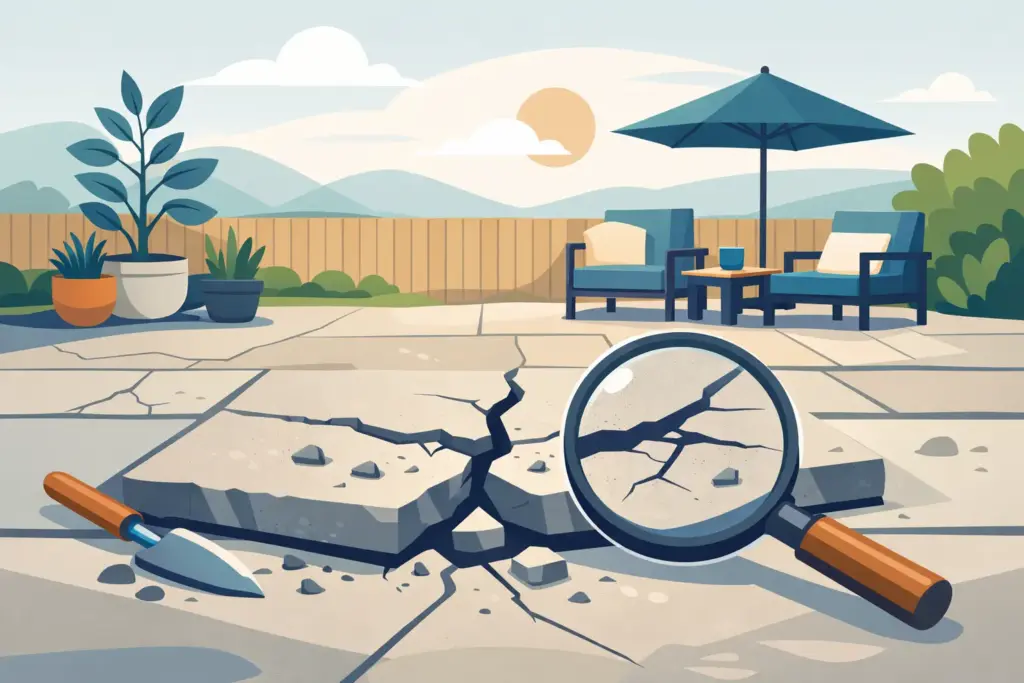
A patio should give you a solid, level surface for years. When cracks start showing up, most homeowners ask the same thing - why are patio slabs cracking if the concrete is still fairly new, or if the patio looked fine not long ago? The short answer is that concrete cracks for a reason, and the reason usually starts below the surface, long before the damage becomes visible on top.
Some cracks are cosmetic. Others point to movement, poor base preparation, drainage problems, or concrete that was placed without the right control measures. If you know what caused the crack, you have a much better chance of fixing it properly and avoiding the same problem again.
Why are patio slabs cracking in the first place?
Concrete is strong under compression, but it does not handle tension or movement well. A patio slab sits outside through heat, cold, rain, freeze-thaw cycles, and shifting soil. That means it is always under some level of stress. The question is not whether concrete can crack. The real question is whether the slab was built to manage that stress.
When a patio is installed correctly, small shrinkage cracks or controlled movement at joints may happen without affecting performance. When the slab is poured over weak ground, made too thin, finished too wet, or exposed to poor drainage, cracks become wider, more noticeable, and more likely to spread.
The most common causes of cracked patio slabs
Poor base preparation
This is one of the biggest reasons patios fail early. If the ground under the slab was not excavated properly, compacted in lifts, and built up with the right base material, the patio can settle unevenly. One part of the slab stays supported while another drops or shifts. That difference creates stress, and stress creates cracks.
A patio may look perfect on pour day and still have trouble months later if the base underneath was rushed. Soft soil, organic material, loose fill, or inadequate compaction can all lead to movement.
Freeze-thaw movement
In colder climates, water gets into the soil or into small pores and cracks in the concrete. When temperatures drop, that water freezes and expands. When it thaws, the ground relaxes again. Over time, that repeated cycle can lift, shift, and weaken a patio slab.
This is especially hard on patios that do not drain well. If water sits near the slab edge or below the surface, freeze-thaw pressure can become a yearly problem instead of a one-time event.
Too much water in the concrete mix
Water helps make concrete workable, but too much of it reduces strength. It is common on rushed jobs for extra water to be added so the mix is easier to place and finish. That may save time in the moment, but it can lead to shrinkage, weaker concrete, and surface cracking later.
The trade-off is simple. A wetter mix is easier to handle, but a properly proportioned mix gives you better long-term performance.
Lack of control joints
Concrete shrinks as it cures. That is normal. Control joints are placed to create planned weak points where the slab can crack in a cleaner, more controlled way. If a patio has no joints, too few joints, or joints cut too late, the concrete will still relieve stress - just wherever it wants.
That often means random cracks running across the middle of the patio instead of neat lines where movement was expected.
A slab that is too thin
Not every patio needs the same build. Foot traffic is different from supporting heavy planters, outdoor kitchens, hot tubs, or repeated equipment access. If the slab thickness does not match the use and conditions, the patio becomes more vulnerable to cracking.
Thin concrete over unstable ground is a bad combination. Even a well-finished surface cannot make up for a slab that lacks proper structural support.
Poor drainage around the patio
Water is one of the most damaging forces around concrete. If downspouts discharge near the patio, the yard slopes toward the slab, or runoff sits around the edges, the base can soften and wash out over time. That leaves unsupported areas beneath the concrete.
Once voids develop under a slab, cracking becomes much more likely. In some cases, corners break first. In others, long diagonal cracks appear as the patio bridges over empty space.
Tree roots and ground movement
Roots can push up from below or disturb the soil as they grow. Expansive soils can also swell when wet and shrink when dry. Both situations create movement that a rigid concrete slab cannot absorb well.
This is one of those cases where the crack itself is only part of the issue. If active movement continues, a simple surface repair may not last.
Not every crack means the patio is failing
That is the part many homeowners need to hear. A hairline crack does not always mean the patio was built poorly or needs full replacement. Concrete can develop small shrinkage cracks and still remain structurally sound.
What matters is the size, depth, location, and behavior of the crack. A narrow crack that stays flat and does not widen may be mostly cosmetic. A wider crack with one side higher than the other is more serious because it points to settlement or movement. Multiple spreading cracks, corner breaks, or sections that rock underfoot deserve closer attention.
If the patio is also holding water, pulling away from steps, or creating a trip hazard, the issue goes beyond appearance.
Signs the problem is more than cosmetic
Homeowners often wait because a crack seems minor at first. Sometimes that is reasonable. Sometimes it gives water more time to get into the slab and base.
It is worth paying attention if you notice cracks wider than about 1/8 inch, uneven slab edges, pooling water, chipping along the crack line, or cracks that keep growing from season to season. Discoloration, spalling, and surface scaling can also show that moisture is getting in and freeze-thaw damage is doing its work.
A cracked patio near foundation walls, stairs, or basement walkouts should be taken seriously. In those areas, drainage and structural relationship matter more.
How to prevent patio slabs from cracking
The best prevention starts before the concrete truck arrives. Proper excavation, a compacted stone base, correct slab thickness, reinforcement where needed, and well-placed control joints all matter. So does grading the area so water moves away from the patio instead of underneath it.
Curing matters too. Concrete gains strength over time, and the early curing period is where many avoidable problems begin. If the surface dries too fast in heat or wind, shrinkage stress increases. If it is overworked during finishing, the top can weaken.
For homeowners, maintenance still plays a role after installation. Keep runoff under control, avoid letting water collect against the slab, and seal the concrete when appropriate for the finish and exposure. If a small crack appears, addressing it early is usually cheaper than waiting for movement and moisture to make it worse.
Repair or replace - it depends on the cause
This is where honest evaluation matters. If the slab is mostly stable and the crack is limited, repair may be the right move. Crack filling, sealing, joint repair, or surface restoration can extend the life of a patio when the base is still doing its job.
If the slab has widespread settlement, poor drainage, broken corners, multiple movement cracks, or significant height differences, replacement is often the better investment. Patching over a failed base usually gives you a short-term cosmetic fix, not a durable result.
A good contractor does not just look at the crack. They look at the grading, sub-base, slab thickness, surrounding structures, drainage paths, and how the patio is being used. That is how you separate a real fix from a temporary cover-up.
Why are patio slabs cracking even when they look professionally finished?
Because finish is only one part of the job. A patio can have clean edges, a smooth surface, and a nice decorative pattern and still crack if the groundwork was weak. Homeowners naturally judge concrete by what they can see, but long-term performance comes from what is underneath and how the slab was designed to handle movement.
That is why craftsmanship in concrete is not just about appearance. It is about preparation, placement, curing, drainage, and knowing how exterior slabs behave over time. At Sampson Concrete & Masonry, that is the difference between a patio that looks good for one season and one that stays solid, safe, and worth the investment.
If your patio is cracking, do not assume the answer is always simple or always serious. The smartest next step is to find out what is causing the movement and deal with that cause before the surface damage turns into a larger repair.