How to Fix Sinking Steps the Right Way
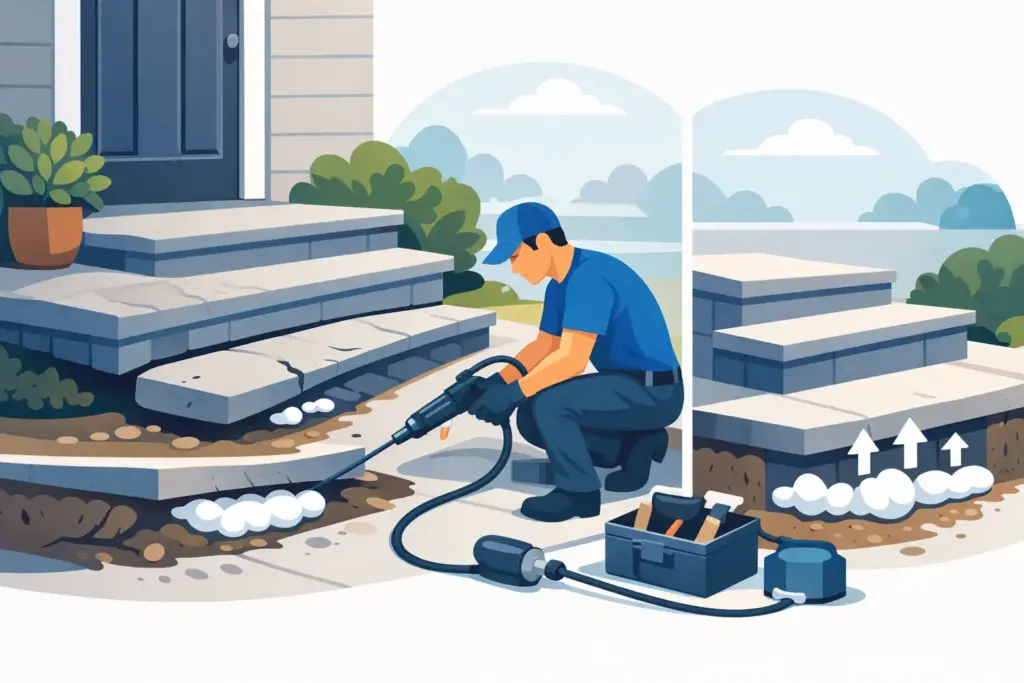
A front step that drops even an inch starts causing problems fast. Doors stop swinging cleanly, railings shift, water runs back toward the house, and what looked like a minor settling issue turns into a real safety hazard. If you are wondering how to fix sinking steps, the first thing to know is this: the right repair depends on why they moved in the first place.
Some steps can be reset and stabilized. Others need partial rebuilding. And in more serious cases, replacement is the smarter investment because it solves the base failure instead of covering it up. A clean-looking patch is not much help if the steps keep sinking next season.
Why steps sink in the first place
Most sinking steps are not failing because the concrete itself is weak. The usual problem is underneath. If the base was not properly compacted, soil can settle over time and leave parts of the stair unsupported. Freeze-thaw cycles make this worse, especially where water keeps getting under the slab or around the stair sides.
Poor drainage is another common cause. Downspouts that empty near the entry, grading that sends water toward the house, or gaps that let runoff wash out the base can all lead to movement. In some homes, older steps were simply built on fill that was never stable enough to support the weight long term.
Masonry steps can also sink when adjacent structures shift at different rates. For example, brick or block steps connected near a porch, foundation wall, or walkway may pull apart as one section moves more than the other. That is when you start seeing separation cracks, loose mortar joints, and uneven treads.
Signs the problem is more than cosmetic
A hairline crack alone does not always mean the steps are sinking. But when you see several symptoms together, the issue is usually structural. Watch for steps tilting away from the house, gaps where the stairs meet the porch or landing, sunken corners, rocking sections, and pooling water on the treads.
If the rise between steps has changed noticeably, that matters too. Uneven stair height is a trip hazard and one of the clearest signs that the structure has shifted. Railings that feel loose or misaligned are another warning sign, since movement in the concrete or masonry often affects anchoring points.
When the steps are pulling away from the home, you should take that seriously. That can point to erosion, settlement, or failing support below the stair system. It is not the kind of problem to solve with surface caulk and hope.
How to fix sinking steps based on the actual damage
There is no single repair method that works for every job. The right approach depends on the type of steps, the amount of settlement, and whether the base can still be trusted.
Minor settlement in solid concrete steps
If the concrete is still in good shape and the sinking is limited, lifting may be possible. In some cases, a contractor can raise settled concrete by filling voids beneath it. This works best when the stair section is structurally sound and the movement is not severe.
The benefit is that lifting is faster and less disruptive than full replacement. The trade-off is that it does not make damaged concrete new again. If the steps are badly cracked, crumbling, or already patched multiple times, lifting may only buy limited time.
Resetting masonry or precast steps
Precast concrete steps and some masonry stair assemblies can sometimes be removed, the base rebuilt, and the unit reset level. This is often the right move when the step itself is worth saving but the support underneath has failed.
A proper reset means more than shimming one side up. The old unstable material has to come out, the sub-base has to be rebuilt and compacted correctly, and drainage has to be addressed so the same washout does not happen again. Done right, this gives the steps a stable foundation instead of a temporary correction.
Rebuilding stairs with damaged structure
When steps are cracked through, separated, leaning, or tied into surrounding masonry that is also failing, rebuilding is often the best path. That allows the entire system to be corrected at once, from excavation and base prep to tread alignment and finish work.
This is especially true for poured concrete stairs with major settlement or brick and block steps with extensive mortar failure. Rebuilding costs more upfront, but it usually delivers better long-term value than repeated repairs on a failing structure.
What a proper repair should include
The visible repair is only part of the job. The quality of the result comes from the groundwork.
First, the cause of movement needs to be identified. That means looking at drainage, grading, nearby cracking, soil conditions, and how the steps connect to the house or porch. Without that, even a neat repair can fail early.
Next comes stabilization. If the base is compromised, it needs to be excavated and rebuilt with proper compaction. This is what supports the weight and resists future settlement. On exterior concrete and masonry work, shortcuts below grade are what usually come back to cause trouble.
Then the stair geometry has to be corrected. Treads should sit level, risers should be consistent, and landings should drain properly. A repair that looks straight from the curb but leaves uneven step heights is not finished correctly.
Finally, surface details matter. Clean edges, sound joints, solid railing attachment, and a finish that matches the surrounding hardscape all affect safety and curb appeal. Homeowners notice the difference between a patched repair and a professional rebuild.
When not to repair sinking steps
Sometimes homeowners ask for the least expensive fix, which is understandable. But there are situations where repair is not the smart choice.
If the steps have sunk significantly, if the concrete is breaking apart, or if water keeps undermining the area, replacement often makes more sense. The same goes for stairs that were built poorly the first time, with weak reinforcement, an undersized base, or bad alignment. Spending money to preserve a failing installation can end up costing more than starting fresh.
Appearance is another factor. Front steps are one of the first things people see. If the stairs are badly worn, mismatched, or patched in several places, rebuilding can improve both safety and the look of the entry. For many homeowners, that matters just as much as the structural correction.
Can you fix sinking steps yourself?
Very minor issues around steps, like sealing joints or improving drainage near the area, may be manageable for a handy homeowner. But if the steps themselves are sinking, tilting, or separating, this is usually not a do-it-yourself repair.
The risk is not just cosmetic. Stair work affects safety, load support, and water control near the home. Temporary fixes like wedging material under one side, adding patch concrete to level a tread, or stacking pavers around the base tend to fail quickly and can make the hazard worse.
A professional repair should solve the cause, not just make the step look straighter for a few months.
How to prevent steps from sinking again
The best long-term repair includes prevention. Water should drain away from the stairs, not collect around them. That may mean adjusting grading, extending downspouts, or correcting nearby hardscape that traps runoff.
The base under the stairs needs to be compacted properly and built for the conditions on the site. In colder climates, frost movement is part of the equation, so materials and installation methods matter. If the steps connect to a porch, walkway, or foundation area, those transitions should also be checked so one moving section does not keep stressing another.
Good construction is what holds the repair together year after year. That is where experienced concrete and masonry work makes a real difference.
Choosing the right contractor for sinking step repair
If you are hiring out the work, ask how the cause of settlement will be addressed, not just how the surface will be fixed. A dependable contractor should be able to explain whether the steps can be reset, lifted, repaired, or should be rebuilt entirely.
You also want clear expectations on materials, base preparation, drainage corrections, finish quality, and warranty coverage. Serious contractors do not guess through structural stair repairs. They assess the movement, recommend the right scope, and build it to last.
At Sampson Concrete & Masonry, that is the standard approach. Strong base work, clean execution, and durable results matter because steps are not just decorative concrete - they are part of the safe use of your home.
If your steps are sinking, do not wait for the crack to widen or the trip hazard to get worse. The right repair now protects the entry, improves safety, and saves you from paying twice for the same problem later.