Guide to Residential Foundation Pouring
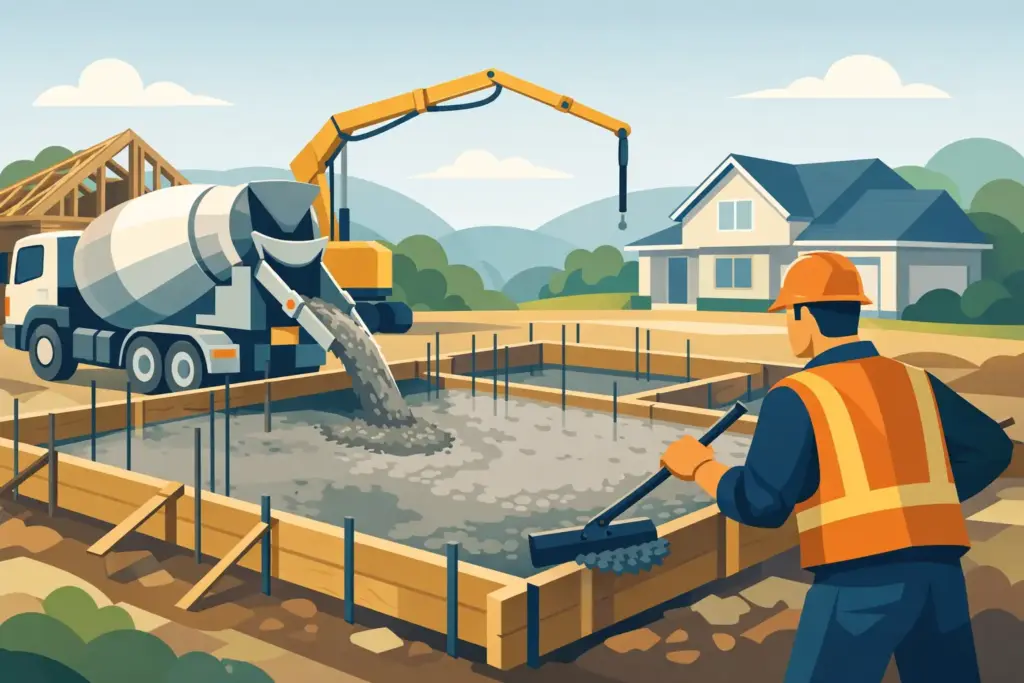
A foundation pour is one of those jobs where small mistakes get expensive fast. If you are looking for a guide to residential foundation pouring, the main thing to understand is this: a strong foundation starts well before concrete shows up on site. Soil conditions, layout accuracy, drainage planning, reinforcement, and curing all matter just as much as the mix itself.
For homeowners, that can make the process feel more technical than it needs to be. The good news is that the basics are straightforward when handled by an experienced crew. The goal is simple - create a stable, level, properly reinforced base that can support the home for decades without settlement, cracking, or moisture trouble.
What residential foundation pouring really involves
Residential foundation pouring is not just a one-day concrete placement. It is a sequence of steps that have to line up correctly. First comes excavation and subgrade preparation. Then the forms are built, reinforcement is installed, and inspections are completed where required. After that, the concrete is poured, placed, finished, and cured under controlled conditions.
Different homes call for different foundation systems. Some projects involve full basement foundations, while others use slab-on-grade construction or frost-protected footings. The right choice depends on the house design, local code requirements, drainage conditions, and the soil under the structure. That is why a dependable contractor does not treat every site the same.
Site prep sets the tone for the whole job
The concrete gets most of the attention, but the ground underneath is what decides whether a foundation performs well over time. If the excavation is uneven, the soil is soft, or organic material is left in place, the slab or footings may settle unevenly. That leads to cracks, shifting, and repair work no homeowner wants to deal with later.
A proper site prep phase usually includes excavation to the correct depth, removal of unsuitable material, compaction of the subgrade, and grading for drainage. In some cases, additional fill or stone base is needed to create a stable working surface. Wet sites may also need drainage measures before the pour ever begins.
This is one of the biggest trade-off areas in any guide to residential foundation pouring. Cutting time here can save money on the front end, but it raises the risk of structural and moisture issues later. Good crews do not rush this stage because they know the cost of getting it wrong.
Forms, layout, and elevation have to be exact
Once the site is ready, the forms establish the shape, dimensions, and elevation of the foundation. This step needs precision. If the layout is off, the rest of the build can be affected - framing, waterproofing, drainage, and finish work all depend on the foundation being square, level, and true to plan.
Forms must also be secure enough to handle the pressure of wet concrete. Poorly braced forms can shift or blow out during the pour, creating safety problems and leaving behind a foundation that is out of spec. That is why experienced contractors double-check measurements, corners, elevations, and bracing before placement starts.
For homeowners, this is one of those behind-the-scenes details that matters more than it looks. Clean execution at the form stage usually means fewer surprises once the concrete is in place.
Reinforcement is what gives the pour staying power
Concrete is strong in compression, but it has limits when it comes to tension and movement. Reinforcement helps the foundation resist cracking, settlement stress, and load demands. Depending on the design, that may include rebar, wire mesh, or both.
Placement matters just as much as the material itself. Reinforcement needs to be positioned correctly within the concrete, not simply laid on the ground and covered. Spacing, overlap, and support all affect performance. If steel is misplaced, the foundation may not deliver the strength it was designed for.
This is another area where cheap work tends to show up later. A contractor focused on durability pays close attention to reinforcement because the goal is not just to pass inspection. The goal is a foundation that holds up through seasonal movement, moisture exposure, and years of structural load.
Concrete mix and weather both affect the result
Not all concrete pours are the same. The mix design needs to match the job, with the right strength, slump, and additives for the project conditions. A residential foundation often requires a mix that balances workability with long-term performance. Too much water added on site can make placement easier in the moment, but it weakens the finished product.
Weather also changes how a pour should be handled. Hot temperatures can speed up curing too much and lead to surface issues or shrinkage cracking. Cold weather can slow strength gain and create freezing risks if the concrete is not protected. Rain introduces another layer of difficulty, especially if the subgrade becomes unstable or the surface is disturbed during finishing.
That does not mean foundation work stops every time conditions are less than ideal. It means the crew has to adjust the plan. Sometimes that includes different timing, cold-weather protection, moisture control, or curing methods that match the forecast.
Drainage and waterproofing are part of the foundation job
A strong foundation is not only about bearing weight. It also has to manage water. If drainage is ignored, even a well-poured foundation can end up with moisture intrusion, hydrostatic pressure, and long-term damage around the basement or crawl space.
Good foundation work includes planning for water movement around the structure. That may involve perimeter drains, gravel backfill, damp-proofing or waterproofing coatings, and final grading that directs water away from the home. The details depend on the site and the type of foundation, but the principle stays the same - water should never be allowed to collect against the walls.
Homeowners sometimes focus only on the visible concrete and miss this part. In practice, drainage protection is one of the smartest investments in the whole project because it helps prevent future repairs, interior moisture problems, and damage to finished spaces below grade.
The pour itself needs coordination, not just speed
On pour day, timing matters. The concrete has to be placed efficiently, consolidated properly, and finished to the required level and surface condition. A rushed or disorganized pour can lead to cold joints, voids, uneven surfaces, and other quality problems.
The crew should have a clear plan for delivery timing, placement sequence, access, tools, and finishing steps. That is especially important on residential sites where space may be tight and surrounding areas need to be protected. Clean work matters here. A professional pour is not only structurally sound but also organized and controlled from start to finish.
For larger or more detailed residential jobs, coordination with inspectors, pump operators, and follow-up trades may also come into play. That is one reason full-project contractors bring added value. The work moves better when one team is watching the entire process instead of treating the pour as an isolated task.
Curing is where strength is protected
Fresh concrete does not reach full strength the day it is poured. It needs time and proper curing conditions to develop durability. If curing is neglected, the foundation can lose strength, dry too quickly, and become more prone to cracking.
Proper curing may include keeping the concrete moist, using curing compounds, covering exposed surfaces, or protecting the pour from temperature swings. The right method depends on the weather and the foundation type. What matters is that the concrete is given the environment it needs to gain strength as intended.
This part of the process rarely gets much attention from homeowners, but it should. A good finish on day one means very little if the curing period is handled poorly.
What homeowners should expect from a contractor
If you are hiring for foundation work, clear communication matters almost as much as technical skill. You should expect a contractor to explain the scope, timeline, site conditions, and any factors that could affect pricing or scheduling. You should also expect honest answers about drainage, reinforcement, and what kind of finish or protection the project includes.
A dependable contractor will not promise that every foundation comes out perfectly crack-free forever. Concrete can develop minor shrinkage cracks even when the work is done properly. What matters is whether the foundation is built to perform structurally, manage moisture, and hold up over time.
That practical approach is what separates serious workmanship from sales talk. At Sampson Concrete & Masonry, that means focusing on structural integrity, clean execution, and results that protect the home as a long-term investment.
A guide to residential foundation pouring starts with the right crew
The strongest foundation projects are the ones that are planned carefully and executed without shortcuts. Every stage matters - soil prep, layout, reinforcement, concrete placement, drainage, and curing all work together. If one piece is weak, the whole system can suffer.
For homeowners, the smartest move is not trying to memorize every technical detail. It is choosing a contractor who treats the job with the seriousness it deserves, explains the process clearly, and builds for long-term performance instead of quick turnover. When the foundation is done right, the rest of the home has something solid to stand on.