Hiring a Basement Walkout Contractor
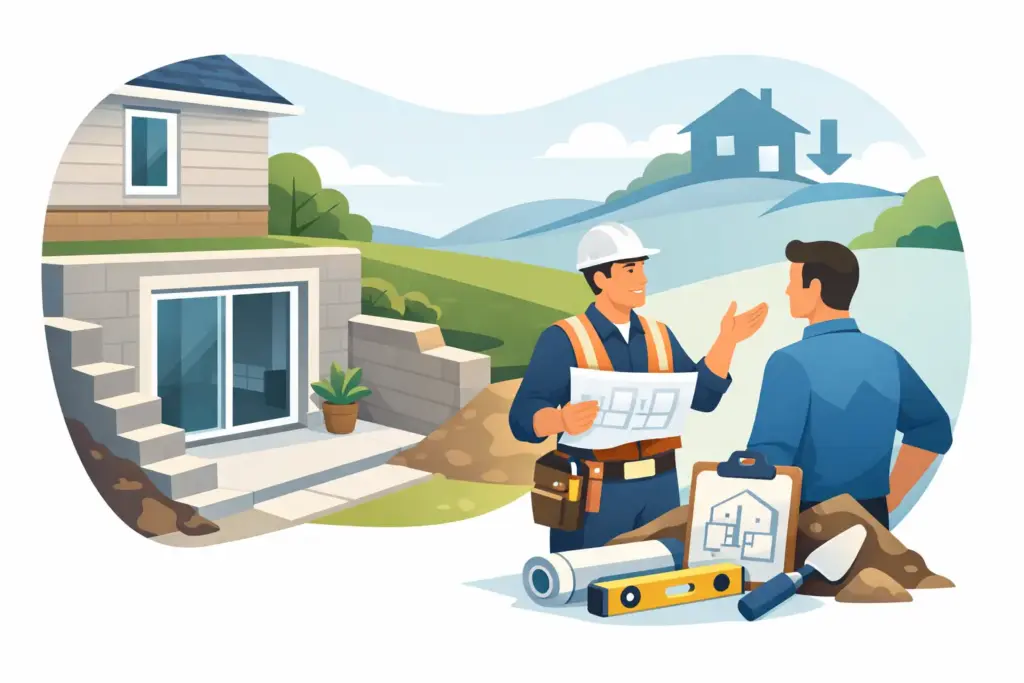
A basement with no direct outdoor access can feel like wasted square footage. A properly built walkout changes that fast. If you are looking for a basement walkout contractor, you are not just hiring someone to cut into concrete - you are trusting a crew to handle excavation, drainage, structure, stairs, and finish work in a way that protects your home.
This is one of those projects where good workmanship matters from the first cut to the final grade. Done right, a basement walkout adds practical access, improves function, and can make the lower level feel more like real living space. Done poorly, it can create water problems, settlement issues, and repairs that cost more than the original job.
What a basement walkout contractor actually does
A basement walkout is more than an opening in a foundation wall. The work usually involves excavation around the home, careful removal of part of the foundation, building retaining walls or sidewalls as needed, pouring or repairing concrete, installing stairs, and shaping the surrounding grade so water moves away from the house instead of toward it.
An experienced basement walkout contractor also looks at the conditions that homeowners do not always see at first. Soil type, drainage patterns, frost movement, foundation thickness, access for equipment, nearby utilities, and the condition of the existing wall all affect how the project should be built.
That is why this is not a job for a general labor crew with a saw and a skid steer. It takes planning, structural judgment, and clean execution. If the opening is not reinforced properly or the surrounding concrete is not tied in correctly, the problem may not show up right away - but it will show up.
Why homeowners choose to add a walkout
For some homeowners, the goal is convenience. They want direct access to the backyard, easier movement for storage, or a separate entrance for a finished basement. For others, it is about making the lower level more usable and improving the overall value of the property.
A walkout can also solve practical issues on sloped lots where exterior access makes more sense than routing everything through the main floor. In many homes, it creates better flow between indoor and outdoor spaces and makes the basement feel less closed off.
There is also a safety benefit. When stairs, landings, and drainage are built correctly, a walkout can provide a more secure and stable access point than older improvised exits or worn exterior steps.
What separates a good basement walkout contractor from the rest
The biggest difference is not usually in the sales pitch. It is in how the contractor approaches risk. A qualified contractor pays attention to structure first, then water control, then finish. That order matters.
A reliable crew should be able to explain how the opening will be cut, how the remaining wall will be supported, how the stair area will be retained, and how water will be directed away from the new entrance. If those answers are vague, that is a warning sign.
You also want a contractor who can deliver the whole project, not just one piece of it. Homeowners often run into trouble when excavation, concrete, masonry, and repairs are split across multiple subcontractors with no clear responsibility. Full-project delivery usually means fewer delays, cleaner coordination, and better accountability.
Craftsmanship matters too. A walkout is a structural project, but it is also a visible exterior feature. The concrete finish, the stair geometry, the masonry detail, and the final grading all affect how the project looks and how it performs over time.
Basement walkout contractor costs depend on more than size
Most homeowners ask about price first, and that makes sense. But with walkouts, cost depends on site conditions as much as the opening itself.
A straightforward project on a favorable grade is very different from a tight-access property with heavy clay soil, drainage challenges, and a thicker foundation wall. Retaining walls, new concrete stairs, railing requirements, waterproofing repairs, and disposal of excavated material can all shift the final number.
The condition of the existing foundation also matters. If the concrete or block wall already shows cracking, movement, or deterioration, repairs may need to happen before or during the cut. That adds scope, but it also protects the house from bigger structural issues later.
The best estimates are detailed and realistic. A low number that skips drainage, finish work, or reinforcement is not a bargain if the project has to be corrected after the fact.
Signs your project needs a contractor with structural experience
Some walkout jobs are relatively clean. Others involve more risk and should be handled by a contractor with serious concrete and masonry experience.
If your home has an older foundation, visible cracking, bowing walls, patched concrete, water intrusion, or a previous repair history, the walkout needs to be planned carefully. The same goes for homes with limited machine access or properties where retaining walls will carry significant soil pressure.
This is where hands-on trade knowledge matters. A contractor who regularly works on foundations, stairs, masonry walls, and structural concrete is better positioned to spot problems before the excavation begins. That can save time, money, and a lot of avoidable stress.
Questions to ask before you hire a basement walkout contractor
You do not need to be a construction expert to ask the right questions. Start with how the contractor plans to handle the structure, drainage, and finish details. Ask what parts of the job are included, what conditions could change the scope, and how the site will be protected during the work.
It also helps to ask about warranty coverage and what kind of workmanship standard the crew follows. A contractor who stands behind the job is usually more focused on long-term performance, not just getting through the install.
Pay attention to how clearly they communicate. Homeowners should understand what is being built, why it is being built that way, and what to expect at each phase. Straight answers are usually a good sign. Evasive ones are not.
Why drainage and grading matter as much as the concrete
Many walkout problems do not start with the opening. They start with water. If the base of the stairs collects runoff or the surrounding grade pitches back toward the house, the new entry can become a weak point during heavy rain or snow melt.
That is why proper drainage is part of the job, not an add-on. Depending on the site, that may involve grading corrections, drainage stone, waterproofing measures, or a more specific drainage solution around the stairwell area.
A good contractor plans for weather exposure from day one. The goal is not just to create access. The goal is to create access that stays dry, stable, and durable through seasonal changes.
Choosing a contractor who builds for the long term
A basement walkout should feel like a permanent improvement to the home, not a patched-on feature. That comes down to materials, workmanship, and the discipline to do the unglamorous parts correctly.
Concrete needs to be placed and finished properly. Masonry or retaining walls need to be built to hold up under pressure. Stairs need to feel safe underfoot and look consistent. The surrounding area needs to be restored cleanly so the project looks like it belongs with the house.
That is the standard homeowners should expect. In markets like Brantford, Hamilton, Cambridge, Brant, and Oxford, property owners are not just paying for a hole in the wall. They are investing in safe access, better function, and protection for the structure around it.
Sampson Concrete & Masonry approaches this kind of work the right way - with attention to structural integrity, clean finishes, and full-project accountability backed by workmanship warranty coverage.
If you are comparing contractors, look past the basic estimate and focus on who understands the full scope. The right basement walkout contractor will treat your home like a structure worth protecting, not just another excavation job. That is what gives you an entrance that looks right, works right, and holds up for years.