Concrete Porch Installation Done Right
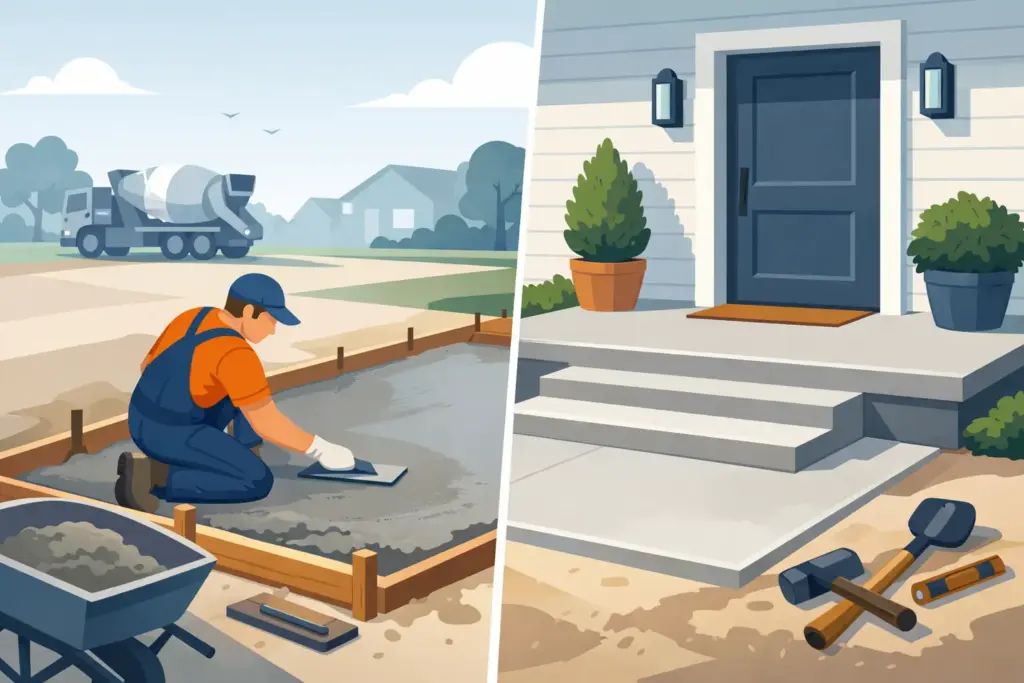
A front porch does more than fill the space between your door and the yard. It carries daily foot traffic, supports steps and railings, sheds water away from the house, and shapes the first impression people get from your property. That is why concrete porch installation is not a job to treat like a basic slab pour. When it is built properly, a concrete porch gives you strength, clean lines, safer access, and a finish that holds up through weather and use.
For many homeowners, the porch becomes a replacement project after years of cracking, settling, or surface flaking. In other cases, it is part of a larger exterior upgrade that includes stairs, walkways, or masonry repairs around the entrance. Either way, the goal is the same - build something that looks sharp, drains properly, and stays solid over time.
Why homeowners choose concrete for a porch
Concrete is a practical choice because it balances durability, design flexibility, and cost control. A properly installed concrete porch can handle freeze-thaw cycles, regular traffic, and the weight demands that come with railings, steps, and adjoining landings. It also gives you options on the finish. Some homeowners want a standard broom finish for traction and a clean appearance. Others want decorative borders, a smoother architectural look, or stamped concrete that adds more visual character.
Compared with wood, concrete does not deal with rot, insect damage, or constant repainting. Compared with pieced-together repairs on an aging porch, a full replacement often makes more sense when the base has already failed. The trade-off is that concrete needs the right base preparation, reinforcement, forming, and curing. If any of that is rushed, even a new porch can start showing problems earlier than it should.
What good concrete porch installation really involves
A lot of porch issues start below the surface. A solid-looking top can still fail if the ground underneath shifts, drains poorly, or was never compacted the right way. That is why good concrete porch installation starts with demolition and site prep, not just forming and pouring.
The old porch or damaged material needs to come out cleanly so the new installation is not tied to unstable concrete. From there, the subgrade has to be evaluated. Soft spots, poor fill, and signs of water movement need to be addressed before the new base goes in. A compacted stone base helps create the stable support that a porch needs, especially in climates where freezing and thawing can put pressure on the slab.
Forming matters just as much. The porch has to be set to the correct height, pitch, and dimensions so water moves away from the house instead of sitting near the foundation. If steps are part of the project, rise and run need to be consistent. Small mistakes in layout can create awkward access, drainage trouble, or safety issues that are hard to ignore once the concrete cures.
Reinforcement, thickness, and structural support
Not every porch is the same. Some are simple landings at grade. Others are elevated, tied into stairs, or built around foundation walls and masonry features. That is where experience matters. Thickness, reinforcement, and support details should match the demands of the project.
In many cases, reinforcing steel or wire reinforcement is used to help control cracking and improve performance. That does not mean concrete will never crack. Concrete naturally develops some cracking over time. The goal is to minimize uncontrolled movement and place the slab on a stable base so normal shrinkage does not turn into major structural failure.
Where porches connect to the home, the transition also needs attention. Joints, connections, and elevation should be planned with the house in mind. A porch that traps water against siding, brick, or the foundation can create larger repair costs later.
Design choices that affect appearance and performance
A porch should fit the home, not look like an afterthought. Size, edge detail, step placement, and surface finish all shape the final result. A plain gray porch can look excellent when the proportions are right and the finish is clean. Decorative concrete can add more curb appeal, but only when the design suits the house.
Stamped finishes, exposed aggregate, and colored concrete are all options, but they come with different maintenance and cost considerations. A broom finish is often the most practical for traction and year-round use. Decorative finishes can elevate the look, especially on front entrances, but they need proper sealing and good workmanship to avoid a patchy or overly busy appearance.
Porch edges and step faces also deserve attention. Crisp forming and a consistent finish make a big difference in the final look. If the porch includes railings, columns, or masonry borders, those elements should be planned before the pour so the finished installation looks integrated rather than pieced together.
Common problems caused by poor porch installation
Homeowners usually notice the same set of problems when a porch has not been built correctly. Cracking that widens quickly, sinking corners, uneven steps, water pooling near the front door, and surface scaling after winter are all signs that something was missed.
Sometimes the issue is weak base preparation. Sometimes it is poor drainage or the wrong concrete mix for the exposure conditions. In other cases, the finishing process is rushed, which can weaken the surface and leave the porch more vulnerable to scaling and wear. These are not cosmetic details. They affect safety, durability, and long-term value.
That is also why patching an old porch is not always the right move. Surface repairs can buy time if the underlying slab is stable and the damage is minor. But if the porch is settling, separating from the house, or breaking down across multiple areas, replacement is usually the stronger investment.
How to know if you need repair or full replacement
A porch with a few surface blemishes may still have years of life left. Hairline cracking, small chips, or isolated wear can sometimes be repaired without tearing everything out. The real question is whether the porch is structurally sound.
If the slab has dropped, if steps are shifting, if water is draining back toward the house, or if the concrete is deeply cracked through multiple sections, replacement usually makes more sense. The same is true when railings have loosened because the supporting concrete has deteriorated. A new porch gives you the chance to correct the cause of the problem instead of covering it up.
For homeowners planning to sell or improve curb appeal, replacement also has a visual advantage. A new, properly finished porch creates a cleaner entrance and can make the whole front elevation look more maintained.
What to expect during a concrete porch installation project
The process starts with measuring, layout, and reviewing the condition of the existing porch and surrounding area. That includes checking grades, drainage, and any tie-in points with steps, walkways, or masonry. Once the plan is set, demolition and excavation can begin.
After the site is prepared and the base is compacted, forms are installed and reinforcement is placed as needed. Then the concrete is poured, leveled, and finished to match the agreed design. Timing matters here. Good finishing is not just about appearance. It affects surface strength, slip resistance, and how well the porch holds up over time.
Curing is the final piece that many people overlook. Concrete needs time to gain strength. Using the porch too early or exposing it to rough treatment before it is ready can compromise the finished work. A contractor should give clear guidance on when the surface can handle foot traffic and when any related features, such as railings or adjacent work, can be completed.
Choosing the right contractor for concrete porch installation
This is one of those projects where the lowest bid can cost more later. A porch needs more than a truck and a finishing broom. It needs proper planning, solid preparation, and trade experience. Ask how the base will be prepared, how drainage will be handled, what finish options make sense for your property, and whether the work is backed by a workmanship warranty.
A dependable contractor should be able to explain the scope clearly and speak honestly about what your porch needs. Some homes need a straightforward replacement. Others need additional masonry, stair work, or structural repair around the entrance. A company that handles the full project can usually deliver a cleaner result because each part is planned together. That is the standard Sampson Concrete & Masonry brings to residential work - durable construction, clean execution, and results built to last.
If your porch is cracked, unsafe, outdated, or simply not doing your home any favors, now is the right time to address it properly. A well-built concrete porch gives you safer access, stronger performance, and a front entrance that looks like it belongs on the house for years to come.