Guide to Concrete Walkway Drainage
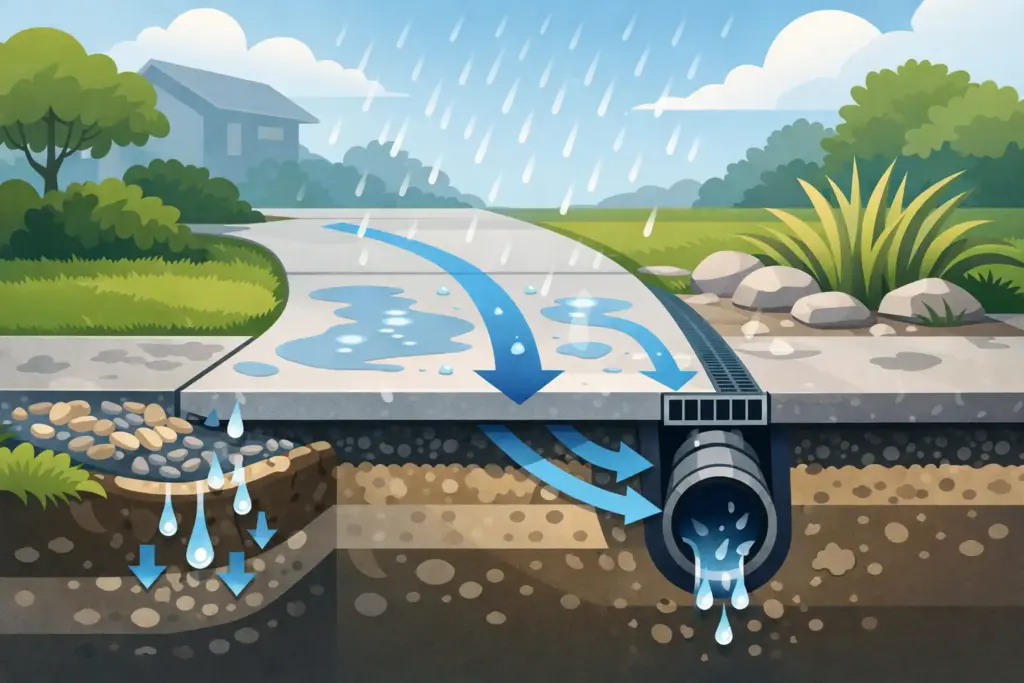
A concrete walkway should guide people safely to your door, not funnel water back toward the house. That is why a good guide to concrete walkway drainage starts with one basic truth: drainage is not an extra feature. It is part of the build. If water sits on the surface, runs against the foundation, or freezes along the walking path, the problem is no longer cosmetic. It becomes a safety issue, a maintenance issue, and eventually a repair bill.
Homeowners often notice drainage problems after the concrete is already in place. A puddle forms near the steps. Water spills over the edge into a planting bed and washes it out. Ice builds in winter exactly where people step. These are all signs that the walkway may be pitched incorrectly, installed without proper grading, or missing a drainage solution that fits the property.
Why concrete walkway drainage matters
Concrete is durable, but it is not immune to bad water management. When a walkway holds water, that moisture works its way into joints, edges, and nearby soil. Over time, the ground beneath the slab can shift or soften. That creates settlement, cracking, and uneven sections that turn a clean walkway into a trip hazard.
Drainage also affects more than the walkway itself. If runoff is directed toward the home, it can increase moisture around the foundation and contribute to basement leaks or frost-related movement. If it flows across grass or beds, it can erode landscaping and leave low, muddy areas beside the concrete. A walkway that looks solid on day one can age fast when the water has nowhere to go.
For most properties, the goal is simple. Move water away from the house, off the walking surface, and into an area that can handle it properly.
The core of a guide to concrete walkway drainage
The most important factor in walkway drainage is slope. A concrete walkway should not be level by eye alone. It needs a planned pitch so water naturally sheds off the surface instead of collecting in place. In many cases, that means the walkway slopes slightly away from the house or carries water along a controlled path toward the yard.
The exact pitch depends on the layout, length, width, and surrounding grade, but the principle stays the same. Water must be directed with intention. If the property has tight side yards, retaining edges, steps, or nearby structures, that drainage plan becomes even more important because there is less room for water to escape on its own.
Base preparation matters just as much. Even if the surface is poured with the right pitch, a weak or poorly compacted base can settle later and create low spots. That is one reason drainage issues often show up months after installation. The slab did not necessarily fail. The support under it changed.
A proper installation accounts for subgrade conditions, compaction, surrounding elevations, and runoff patterns before the concrete is placed.
Common walkway drainage problems homeowners see
Standing water is the obvious one, but it is not the only warning sign. Sometimes the water disappears quickly, yet damage still builds over time. If you are checking an existing walkway, look at how it behaves during heavy rain and again after temperatures drop.
Puddling near the front steps usually means the slab has low spots or the finish grade traps water against the entry area. Water running toward the foundation suggests the pitch is wrong or the surrounding landscape has changed. Soil washout along the edges can mean runoff is leaving the slab too aggressively without a stable discharge area. In cold climates, recurring ice patches are often the clearest sign that drainage is poor even when the surface looks sound.
Cracks and settlement may also point back to drainage. Water that saturates the soil below or beside the walkway can undermine support and lead to movement. Not every crack is caused by water, but poor drainage often makes a manageable issue worse.
Drainage solutions that actually work
The right fix depends on whether the problem is with the walkway itself, the surrounding grade, or both. There is no one-size-fits-all answer, and that is where experience matters.
Sloping the walkway correctly
For new installations, the cleanest solution is building the proper pitch into the slab from the start. This is the best time to control water because the base, formwork, and elevations are all still adjustable. A well-poured walkway should move water predictably without looking awkward or feeling off underfoot.
If the path connects to stairs, porches, patios, or a driveway, those transitions need to be coordinated. Good drainage can be ruined by one bad tie-in point where water gets trapped.
Adjusting the surrounding grade
Sometimes the walkway is pitched reasonably well, but the lawn, mulch bed, or side yard around it is too high. In that case, water leaves the slab but has nowhere to go. Regrading nearby soil can restore drainage without replacing the concrete.
This approach works best when the slab is still structurally sound and the issue is mostly surface runoff. It is less effective if the walkway has already settled or if the existing elevations around the house leave no room to redirect water safely.
Installing channel or trench drains
Where runoff is concentrated, a drain system may be the right answer. A channel drain can intercept water before it reaches steps, a garage apron, or the foundation line. This is especially useful in tight spaces where gravity does not offer many options.
That said, drains are only as good as their outlet. If the collected water is not discharged properly, the system just moves the problem somewhere else. Drainage design should always consider where the water ends up, not just where it starts.
Using swales or controlled runoff paths
On larger lots or open front yards, a shallow swale or graded runoff path can help carry water away from the walkway. This is often a practical solution when the property already has a natural direction for drainage and only needs shaping to improve flow.
The trade-off is appearance and space. A swale must be subtle enough to look intentional and safe enough to maintain, especially near walkways that see regular foot traffic.
When repair is enough and when replacement makes more sense
If a concrete walkway has minor drainage issues but is otherwise in good shape, targeted correction may be possible. Regrading, adding drainage, or addressing one problem area can extend the life of the installation and prevent bigger damage.
If the slab has widespread settlement, repeated cracking, edge failure, or water is consistently running back toward the home, replacement is often the smarter investment. Trying to patch drainage onto a badly sloped or unstable walkway can cost more over time than rebuilding it correctly.
This is where homeowners benefit from an honest site assessment. The right contractor should be able to explain whether the issue is cosmetic, structural, or drainage-related and recommend a fix that matches the condition of the property. At Sampson Concrete & Masonry, that kind of practical judgment is part of the job. The goal is not just to pour concrete. It is to install a walkway that looks clean, performs well, and holds up.
How to plan drainage before a new walkway is poured
A new walkway should be treated as part of the larger property drainage picture. Before the first form is set, the layout should consider roof runoff, downspout locations, driveway elevations, porch height, and the way water already moves across the yard. These details shape the final result more than many homeowners realize.
A straight path is not always the best path if it forces water into a dead zone. A decorative finish is not a problem, but it does not replace proper slope. And a thicker slab will not solve drainage if the grading is wrong underneath it.
The best installs balance appearance and performance. The walkway should fit the home, feel solid underfoot, and direct water where it belongs without creating new trouble elsewhere on the property.
What homeowners should ask before hiring a contractor
If drainage is a concern, ask how the walkway will be pitched, how the base will be prepared, and where runoff will go once it leaves the concrete. Those are basic questions, but the answers tell you a lot about how the job will be handled.
You should also ask how transitions will be managed around steps, porches, and existing surfaces. Many drainage failures start at those connection points. A contractor focused on long-term performance will be able to talk through those details clearly, not brush past them.
A well-built walkway should do more than improve curb appeal. It should protect the entry, reduce slip risk, and help keep water away from areas that cost far more to repair.
If your walkway is holding water now, the best next step is not to wait for the next freeze or the next crack to spread. A sound drainage plan gives concrete a fair chance to last, and that is always money better spent upfront than after the damage shows up.