How to Seal Stamped Concrete Right
Stamped concrete can look outstanding the day it is installed, then start losing its color and crisp finish faster than most homeowners expect. That usually comes down to one thing - the sealer. If you want to know how to seal stamped concrete properly, the goal is not just to make it shiny. The goal is to protect the surface from water, UV exposure, stains, and wear without creating peeling, cloudiness, or a slippery finish.
A good sealer helps stamped concrete hold its color and pattern. A bad application can trap moisture, turn white, wear unevenly, or leave the surface looking plastic. That is why sealing is not just a finishing touch. It is part of protecting the investment.
Why sealing stamped concrete matters
Stamped concrete is decorative concrete, but it still takes the same punishment as any exterior slab. Sun fades color. Rain and snow work moisture into the surface. Freeze-thaw cycles can shorten the life of the finish if water gets in and expands. Driveways, patios, pool decks, and walkways also deal with foot traffic, furniture movement, tire wear, grease, and seasonal debris.
Sealer acts as the protective layer between the slab and those day-to-day stresses. It enhances the color release and pattern detail, but appearance is only part of the job. The bigger value is that it slows down surface wear and helps the concrete resist staining and weather damage.
That said, more sealer is not better. One of the most common mistakes is overapplying it. Thick coats can fail faster than thin, even coats because they do not breathe well and tend to trap moisture.
How to seal stamped concrete step by step
If you are sealing new stamped concrete, timing matters. If you are resealing older concrete, surface condition matters even more. In both cases, clean prep and the right weather window make the difference.
Start with a fully cured, clean surface
New stamped concrete should be allowed to cure before sealing. The exact timing depends on the mix, weather, and product being used, but in most cases the slab needs enough time to dry and release moisture properly. Sealing too early is one of the fastest ways to end up with whitening or peeling.
For older stamped concrete, remove dirt, leaf stains, mildew, oil spots, and any loose or failing sealer. If the surface is dirty, the sealer locks that contamination in. If old sealer is flaking, the new coat will not bond evenly.
Pressure washing can help, but it needs to be done with care. Too much pressure can scar the decorative surface or strip weak areas unevenly. After washing, the concrete must dry completely. Even if the top looks dry, moisture deeper in the slab can still cause trouble.
Pick the right sealer for the job
When homeowners ask how to seal stamped concrete, they are often really asking which sealer to use. The answer depends on the location and the look you want.
Acrylic sealers are common for stamped concrete because they enhance color well and are easier to apply and recoat. They are often used on patios, walkways, and decorative slabs where appearance matters. Solvent-based acrylics usually give a richer, glossier look, while water-based products tend to have less odor and a more natural finish.
Penetrating sealers are different. They soak into the surface rather than sitting as a film on top. These are better when slip resistance and low-sheen protection matter more than color enhancement. They do not usually give stamped concrete that deep decorative pop many homeowners expect, so there is a trade-off.
For high-traffic areas or areas exposed to moisture, the right product matters as much as the application. A patio and a driveway may not need the same type of sealer, even if the concrete pattern is similar.
Wait for the right weather
Sealer should be applied in stable, dry conditions. That means no rain in the forecast, no freezing temperatures, and no extreme heat. Hot sun can make sealer flash off too quickly. Cool, damp conditions can slow curing and trap moisture.
A mild, dry day is usually best. The slab should be dry, and the surface temperature should fall within the product guidelines. This is not the step to rush because the weather looks good for the next two hours. You want a full curing window.
Applying sealer without creating problems
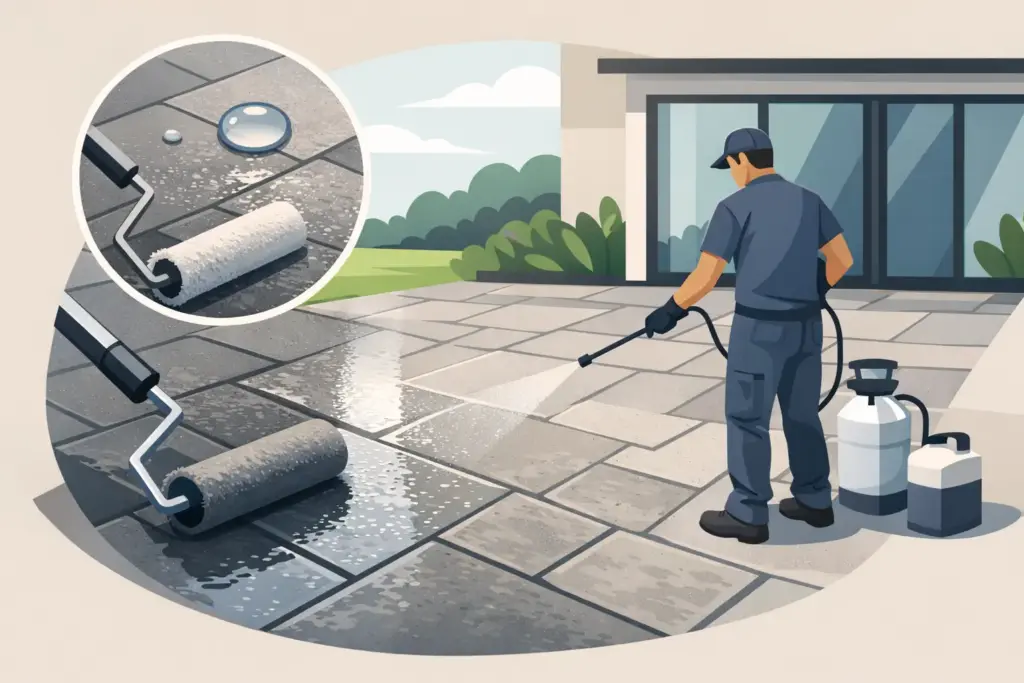
Stamped concrete should be sealed in thin, controlled coats. A pump sprayer is often used for even coverage, and a roller can help back-roll the material for consistency. The goal is uniform coverage, not puddling.
Use thin coats, not heavy coats
Heavy application is where many sealing jobs go wrong. Thick sealer can dry unevenly, become tacky, turn cloudy, or develop roller lines and shiny patches. Thin coats bond better and cure more evenly.
In many cases, two light coats are better than one thick one. The first coat establishes coverage. The second can improve appearance and protection if the first has flashed and the product allows recoating. The exact method depends on the sealer being used, so product instructions matter.
Watch edges, low spots, and textured areas
Stamped concrete has joints, impressions, and textured low points that can collect excess material. If sealer pools in those areas, it often dries darker, glossier, or more brittle than the surrounding surface. That can make the finish look patchy and can lead to premature failure in those spots.
Keep the application moving and check behind yourself as you go. If buildup starts to form, spread it out before it begins to tack up.
Allow proper cure time before use
A sealed slab may feel dry to the touch before it is ready for traffic. Foot traffic, patio furniture, grills, and vehicles should stay off until the coating has cured as directed. Putting weight on it too soon can mark the finish or leave permanent scuffs.
That wait can feel inconvenient, but it is part of getting the protection you paid for.
Common sealing mistakes homeowners run into
The biggest issues with stamped concrete sealer usually come from moisture, surface prep, or overapplication. When a sealed surface turns white or cloudy, moisture is often the cause. That can happen if the slab was sealed before it was dry enough, if rain hit too soon, or if the coating is too thick to let trapped moisture escape.
Peeling and flaking usually point to poor bonding. Sometimes old failing sealer was not removed. Sometimes the surface was dirty. Sometimes the new coat was simply applied too heavily.
Slipperiness is another concern, especially around pools, front entries, and sloped walkways. High-gloss finishes can look attractive, but they are not always the best fit for every location. In some cases, an additive can be used to improve traction, or a different finish can be chosen.
How often stamped concrete should be resealed
There is no one schedule that fits every property. A shaded backyard patio may hold up longer than a full-sun driveway with regular vehicle traffic. Most stamped concrete benefits from periodic resealing, but the right interval depends on wear, weather exposure, and the type of product used.
If the color starts looking dull, water stops beading on the surface, or traffic lanes begin wearing unevenly, it may be time to inspect the sealer. Resealing too soon can create buildup. Waiting too long can leave the slab exposed.
This is where a practical eye helps. A professional contractor can tell whether the slab needs a simple maintenance coat, deeper cleaning, or removal of failing sealer before anything new goes down.
When sealing stamped concrete is better left to a contractor
Homeowners can seal stamped concrete themselves, but decorative concrete is less forgiving than a standard broom-finish slab. If the surface has old sealer problems, inconsistent color, moisture issues, or a large textured area, experience matters.
A contractor can evaluate whether the surface is ready, choose a compatible product, and apply it evenly without overloading the low spots. That is especially important on driveways, pool decks, and high-visibility patios where a bad sealing job is hard to ignore.
At Sampson Concrete & Masonry, the focus is not just getting a surface coated. It is protecting the look, strength, and service life of the concrete so the finish keeps doing its job season after season.
Final thought on how to seal stamped concrete
The right sealer can make stamped concrete look sharper and last longer, but only when the surface is clean, dry, and treated with the right product in the right conditions. If you are unsure whether your concrete needs sealing, resealing, or sealer removal first, it is worth getting a professional opinion before a simple maintenance job turns into a repair.