Concrete Driveway Replacement Done Right
A driveway usually tells you the truth before the rest of the property does. Wide cracks, sinking sections, standing water, and broken edges are more than surface issues - they are signs the slab is losing strength. If you are considering concrete driveway replacement, the real question is not just how it will look when it is finished. It is whether the new driveway will be built to handle traffic, weather, drainage, and daily use for years to come.
For many homeowners, replacement becomes necessary after patching stops working. One repair turns into another, the surface keeps shifting, and the driveway starts to affect both curb appeal and safety. At that point, a full replacement often protects your investment better than continuing to spend money on short-term fixes.
When concrete driveway replacement makes more sense than repair
Not every damaged driveway needs to be torn out. Small surface cracks, minor scaling, or isolated chips can sometimes be repaired if the base is still stable and the slab has not settled. But there is a line where repair becomes cosmetic and the structural problem remains underneath.
If your driveway has multiple deep cracks, uneven sections, frost heave, drainage issues, or areas that have sunk near the garage or sidewalk, replacement is usually the stronger long-term option. The same applies when the concrete is old and worn across most of the surface. In those cases, patchwork can leave you with a driveway that still looks pieced together and may continue to fail.
A good contractor will be honest about that difference. Recommending replacement is not about selling the bigger job. It is about making sure the finished result is safe, clean, and worth the money you put into it.
What causes driveway failure in the first place
Most concrete problems start below the surface. Poor base preparation is one of the biggest reasons a driveway cracks or settles early. If the ground was not excavated properly, compacted correctly, or graded for drainage, the slab is working against unstable support from day one.
Weather also plays a major role. Freeze-thaw cycles put constant pressure on concrete, especially when water gets into cracks or sits near low spots. Add the weight of vehicles, snow removal, de-icing products, and years of wear, and even a decent driveway can start to break down.
Sometimes the original driveway was simply not installed with the right thickness or reinforcement for the load it needed to carry. A narrow or thin slab may look fine at first but struggle over time, especially in homes with larger vehicles, trailers, or repeated traffic in the same wheel paths.
What a proper concrete driveway replacement should include
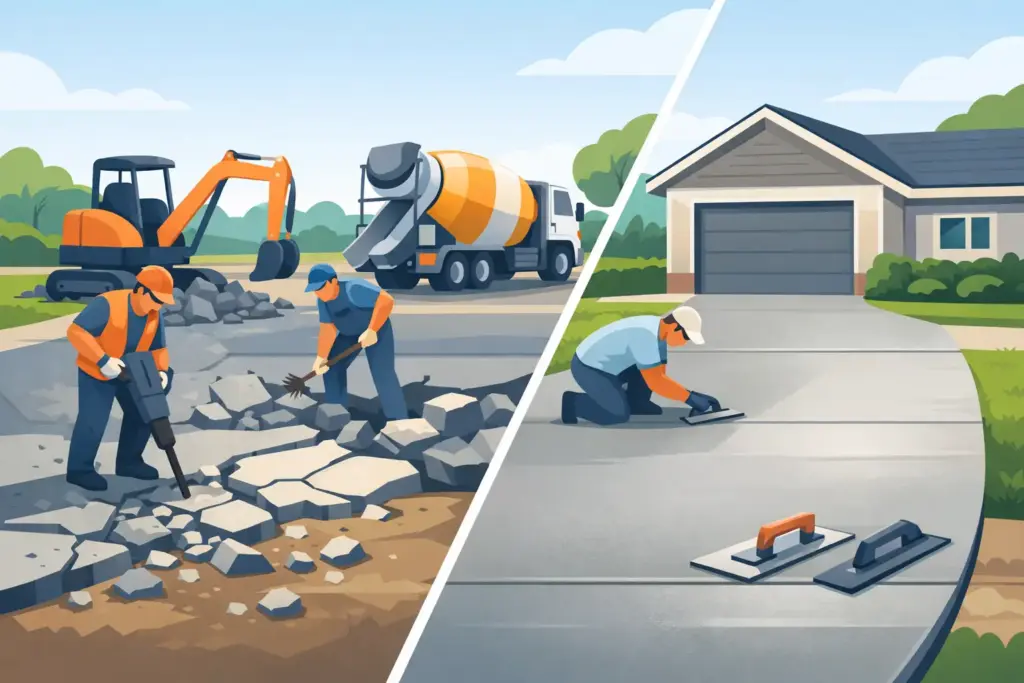
A quality driveway is not just about pouring new concrete over an old problem. True replacement starts with demolition and removal of the failed slab, followed by careful preparation of the sub-base. This stage matters as much as the finish, because the concrete can only perform as well as what supports it.
The area should be excavated to the proper depth, graded for drainage, and compacted thoroughly. If soft spots are present, they need to be addressed before any new concrete goes down. From there, forms are set, reinforcement is added where needed, and the slab is poured to the appropriate thickness for residential use.
Finishing is where craftsmanship becomes visible. Clean edges, proper control joints, a smooth but slip-resistant surface, and a neat transition to sidewalks, porches, or garage floors all make a difference. The final look should feel solid and intentional, not rushed.
Curing matters too. Concrete gains strength over time, and that process needs to be respected. If a driveway is put into service too soon, it can compromise the result before it has had the chance to fully set.
The cost side of concrete driveway replacement
Homeowners naturally want a straight answer on price, but driveway replacement is one of those jobs where the real answer depends on the site. Size is a major factor, but it is not the only one. Thickness, accessibility, demolition requirements, grading corrections, reinforcement, decorative finishes, and drainage improvements can all affect the final cost.
A straightforward replacement on level ground is different from a driveway with severe settling, difficult removal conditions, or custom design work. If borders, stamped concrete, exposed aggregate effects, or widened parking areas are part of the plan, those details should be priced clearly from the start.
The cheapest quote is not always the best value. A lower number can mean thinner concrete, less base work, rushed prep, or fewer finishing details. That may save money up front, but it can cost more later if the slab starts cracking or sinking early. Good workmanship, proper prep, and warranty-backed service are what make replacement worth doing.
Design choices that improve both function and curb appeal
A new driveway should strengthen the property, not just replace what was there before. Standard broom-finished concrete remains a popular option because it is durable, clean-looking, and practical for everyday use. It suits many homes and offers a timeless finish that does not feel overdone.
For homeowners who want a more custom look, decorative concrete can add visual value without sacrificing strength. Stamped patterns, textured borders, and color accents can help the driveway tie in with walkways, porches, or masonry features on the home. The key is choosing a design that fits the property rather than competing with it.
Layout improvements are worth considering during replacement as well. This is the time to widen a narrow drive, adjust the slope, improve the apron, or create a cleaner connection to side paths and entrances. If the old driveway never really worked, replacement is the right time to fix the problem completely.
How to choose the right contractor for concrete driveway replacement
This is one of the most important decisions in the process, because the quality of the installation will determine how the driveway performs long after the crew leaves. Look for a contractor who explains the base prep, thickness, drainage plan, and finishing process clearly. If those details are vague, that is a warning sign.
You also want a company that handles the full job with real trade experience, not one that treats driveways like a quick volume service. Concrete work is part structural and part finish work. It needs both technical knowledge and pride in execution.
Ask about warranty coverage, project timing, and what is included in removal and cleanup. A dependable contractor should be able to walk you through the scope without confusion or pressure. Homeowners in Brantford, Hamilton, Brant, Cambridge, Oxford, and nearby communities often want that balance of honest communication, strong workmanship, and local reliability. That is exactly where an experienced company like Sampson Concrete & Masonry stands apart.
How long a new driveway should last
A properly installed concrete driveway can last for decades, but lifespan always depends on the build quality, site conditions, and maintenance. Good prep, correct thickness, proper drainage, and sound finishing all contribute to long-term durability.
Homeowners can help protect that investment by keeping the surface clean, sealing it when appropriate, avoiding unnecessary heavy loads, and addressing drainage issues around the slab. Even the best concrete benefits from reasonable care. But if the installation is done right from the start, maintenance stays manageable and the driveway continues to do its job without constant attention.
Concrete driveway replacement is about more than appearance
There is no question that a new driveway improves the look of a home. It sharpens curb appeal, makes the property feel cared for, and gives the front of the house a cleaner, stronger presence. But the real value goes deeper than appearance.
A solid driveway improves safety underfoot, protects vehicles from rough surfaces, manages drainage better, and removes the ongoing frustration of living with cracks, movement, and weak spots. It also supports property value because buyers notice exterior condition quickly. A damaged driveway raises concerns. A well-built one sends the opposite message.
If your current driveway is breaking down, the best next step is to look past temporary patching and ask what will truly hold up. A driveway should not be something you worry about every season. It should be built once, built properly, and ready to serve your home for the long haul.