Best Concrete Resurfacing Options
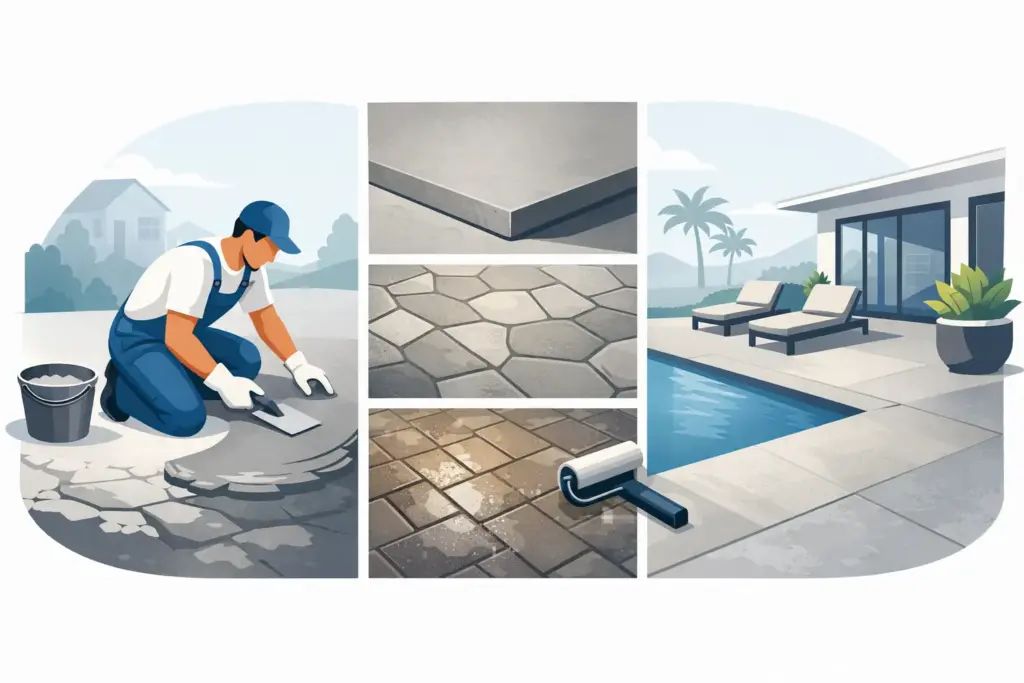
A concrete surface does not have to be completely replaced just because it looks worn out. In many cases, the right concrete resurfacing options can restore appearance, improve traction, and extend service life without the cost and disruption of a full tear-out. The key is knowing what condition the slab is actually in before choosing a finish.
Homeowners often call about a driveway, patio, porch, or walkway that is stained, flaking, faded, or lightly cracked. Sometimes resurfacing is the right move. Sometimes it is not. A good contractor should tell you the difference, because a clean finish only matters if the surface underneath is still sound.
When concrete resurfacing makes sense
Resurfacing works best when the slab is structurally stable but cosmetically worn. That usually means minor surface pitting, discoloration, scaling, hairline cracking, or an outdated finish. If the concrete is still level, drains properly, and has not broken apart from deep structural movement, resurfacing can be a strong value.
It is less suitable when the slab has major settling, widespread heaving, deep cracks that continue to move, severe spalling, or edge failure. In those cases, a new top layer may look good for a while, but the underlying problem tends to come back through the finish. That is where repair or replacement becomes the smarter investment.
This is why surface prep and evaluation matter so much. Resurfacing is not paint. It is a bonded system, and it only performs well when the existing concrete is properly cleaned, repaired, and mechanically prepared.
Concrete resurfacing options for different goals
Not every resurfacing system solves the same problem. Some are best for appearance. Some improve slip resistance. Some are designed to handle traffic and weather better than others. The right choice depends on where the slab is located, how it is used, and what kind of finish you want.
Spray texture finishes
A spray texture finish is a popular option for pool decks, patios, walkways, and porches. It creates a light, textured surface that helps with slip resistance and gives older concrete a fresh, uniform look. It is especially useful when the original slab is sound but visually tired.
This finish is often chosen for comfort and appearance rather than heavy-duty wear. It can work well on residential surfaces with moderate foot traffic, but it is generally not the first choice for a driveway that sees regular vehicle use. The texture can also collect dirt more easily than a smoother finish, so cleaning matters.
Troweled or skim coat overlays
A troweled overlay, sometimes called a skim coat overlay, applies a thin cement-based layer over existing concrete to create a smoother, more refined appearance. This is a good fit for patios, sidewalks, and porches where the slab has minor imperfections but is still solid.
These overlays can be finished in a clean, modern style or used as the base for decorative effects. They offer more design flexibility than a basic repair patch, but they still depend on strong surface bonding. If the existing slab is weak or unstable, the overlay will not solve that.
Stamped overlays
If the goal is curb appeal, stamped overlays are one of the most attractive concrete resurfacing options available. They can mimic the look of stone, slate, brick, or tile while using the existing slab as the base. For homeowners who want a decorative patio, porch, or walkway without full replacement, this can be a practical upgrade.
The trade-off is that stamped resurfacing requires careful installation and a slab that is in reasonably good condition. Decorative work shows flaws more clearly than a plain finish. If there are drainage issues, movement, or uneven areas, those need to be addressed first. Done correctly, though, a stamped overlay can dramatically improve the look of exterior concrete.
Microtoppings
Microtoppings are very thin polymer-modified coatings used to refresh the surface and provide a sleek finish. They are usually chosen for appearance and are common in spaces where homeowners want a smooth, contemporary look.
Because they are thin, they are not intended to hide major damage. They perform best on concrete with only minor surface wear. On exterior surfaces exposed to freeze-thaw cycles, moisture, and traffic, product selection and prep become especially important. This is not a shortcut system. It has to be installed correctly to last.
Epoxy or coated systems
For certain concrete surfaces, especially in garages or covered areas, an epoxy or specialty coating system may be worth considering. These coatings can improve stain resistance and create a cleaner finished look.
That said, exterior use depends heavily on the product and conditions. Some coatings do not perform well in full weather exposure or can become slippery when wet. For open-air patios, steps, or walkways, a cement-based resurfacing system is often the better long-term choice.
What works best for driveways, patios, and walkways
A driveway needs a different resurfacing approach than a backyard patio. Vehicle traffic, road salt, snow removal, and freeze-thaw cycles create more stress. For driveways, durability and bond strength matter just as much as appearance. A decorative finish can still be an option, but it needs to be built for that use.
Patios offer more flexibility. If the slab is stable, homeowners can choose between a clean resurfaced finish, a textured coating, or a decorative stamped look depending on budget and design goals. Walkways and porches often benefit from textured systems because slip resistance is a real safety issue, especially in wet or icy conditions.
Steps are a category of their own. Resurfacing stairs can work when the concrete is sound, but chipped edges, loose sections, or structural cracking usually need more than a cosmetic layer. Safety comes first there.
The real difference is in preparation
Most resurfacing failures do not happen because the product was wrong. They happen because the prep was rushed. Dirt, old coatings, surface weakness, moisture issues, and unrepaired cracks all interfere with bonding.
A proper resurfacing job starts with a close inspection of the slab. Weak material has to be removed. Cracks and damaged spots need to be repaired appropriately. The surface usually needs pressure washing and mechanical profiling so the new material can bond correctly. Once the resurfacer is installed, curing conditions matter too.
This is one area where experience shows. A surface can look good on day one and still fail early if the underlying work was not done right.
When resurfacing is the wrong call
Honest advice matters here. If a slab is sinking, separating, or badly deteriorated, resurfacing may only delay the inevitable. It can make a damaged surface look newer, but it cannot fix structural failure.
Replacement is often the better option when the concrete has major cracks with movement, drainage problems that send water toward the house, broken corners throughout, or years of salt damage that have weakened the slab deeply. The upfront cost is higher, but so is the long-term value when the base problem is corrected.
For many homeowners, the real question is not whether resurfacing is cheaper. It is whether resurfacing is worth doing on that particular slab. Those are not always the same answer.
How to choose the right contractor for concrete resurfacing options
The right contractor should look at the slab condition first and the finish second. If someone recommends a resurfacing system without checking movement, drainage, cracking, and surface integrity, that is a red flag.
You want a contractor who can explain why a specific option fits your surface, how the prep will be handled, and what kind of maintenance to expect afterward. Decorative finishes matter, but so do traffic loads, weather exposure, and the age of the existing concrete. A dependable contractor will talk through those trade-offs plainly.
At Sampson Concrete & Masonry, that practical approach is part of the job. Homeowners deserve a recommendation based on what will hold up, not just what looks good in a photo.
What homeowners should expect from the finished result
A good resurfacing job can make old concrete look cleaner, newer, and more intentional. It can improve curb appeal, refresh outdoor living space, and give worn surfaces more years of use. But it is still tied to the condition of the slab underneath. Resurfacing is a restoration method, not a reset button.
That is why the best outcome comes from matching the system to the surface. A driveway may need a tougher approach than a patio. A walkway may need more texture than a porch. A decorative finish may be worth it in one area and unnecessary in another.
If your concrete is worn but still structurally sound, resurfacing can be a smart way to protect the surface and improve the look of your property without taking on a full replacement. The best next step is not guessing at products. It is getting a straight assessment from a contractor who knows when resurfacing will last and when it will not.