Poured Concrete vs Interlock: Which Lasts?
A driveway that looks sharp on day one can turn into a headache a few winters later if the material choice was wrong. When homeowners ask about poured concrete vs interlock, they are usually trying to balance three things at once - appearance, long-term durability, and how much maintenance they are willing to take on.
The right answer depends on where the surface is going, how it will be used, and what kind of performance you expect over time. A front walkway has different demands than a sloped driveway. A backyard patio used for summer entertaining is a different job than a parking pad that takes daily vehicle traffic. That is why this decision should be based on function first, then finish.
Poured concrete vs interlock: the core difference
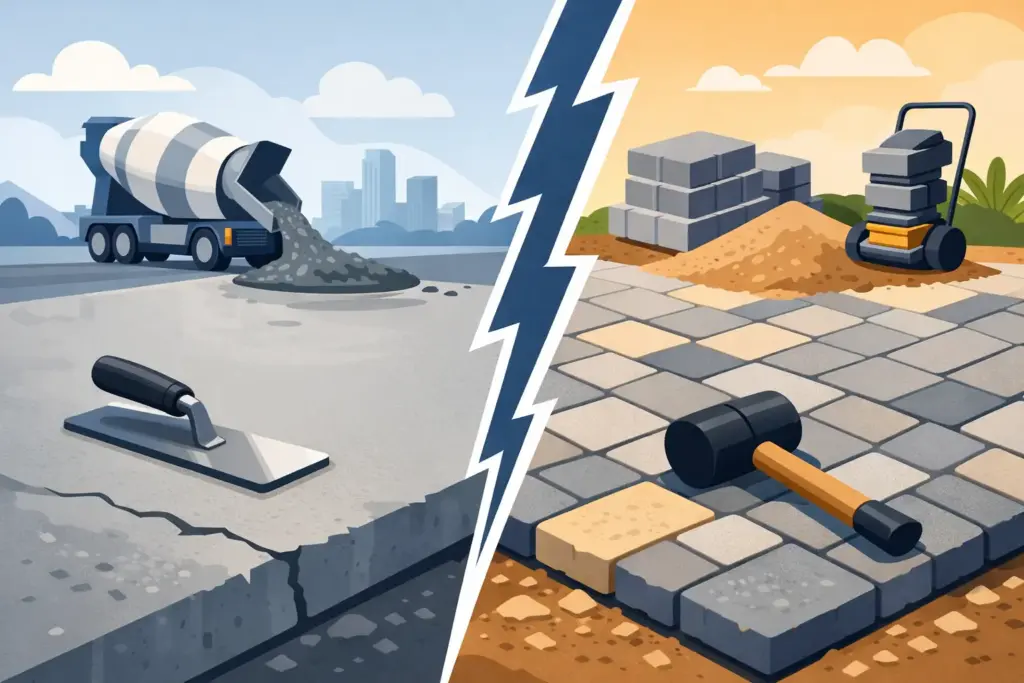
Poured concrete is a continuous slab placed, leveled, and finished on-site. It creates a clean, solid surface that can be broom finished, smooth finished, exposed aggregate, or decorative with stamped patterns and color. It is known for a strong, uniform look and a straightforward installation process when the base is prepared properly.
Interlock is made up of individual pavers installed over a compacted base, with sand in the joints. Instead of one solid slab, it forms a flexible surface made of many pieces working together. That flexibility is one of its biggest strengths, especially in areas where movement, drainage, or future access matter.
Both can look excellent. Both can perform well. The difference is how they handle load, weather, repairs, and upkeep over the years.
Cost: upfront price versus long-term value
For many homeowners, price is the first filter. In most cases, poured concrete starts at a lower upfront cost than interlock, especially for larger areas like driveways, sidewalks, and standard patios. The installation is generally more direct, and material costs are often lower than a full paver system.
Interlock usually costs more at the start because it involves more labor, more material handling, and more detailed installation. Pattern choices, border details, color blends, and site complexity can raise the price further.
That said, lower upfront cost does not always mean lower lifetime cost. If a concrete slab develops major cracking or settlement, repairs can be more noticeable and more disruptive. With interlock, individual sections can often be lifted, corrected, and reset. So the better value depends on whether you prioritize initial budget, future flexibility, or both.
Durability in real-world conditions
If the base is built correctly, poured concrete is a very durable surface. It handles regular foot traffic and vehicle traffic well, and it gives a solid finished look that many homeowners prefer for modern exterior design. But concrete is still concrete - it can crack. Even with proper control joints, reinforcement, and finishing, movement in the ground, freeze-thaw cycles, heavy loads, and drainage issues can lead to cracking over time.
Interlock behaves differently. Because it is made of separate pavers, it can better accommodate minor movement without forming one large visible crack. That makes it appealing in climates where seasonal freeze-thaw conditions put stress on hardscapes. A properly installed interlock system can stay attractive for years, but only if the base has been excavated and compacted to the right standard.
In other words, both materials are only as good as the prep underneath them. Surface materials get the attention, but the base is what decides whether the job lasts.
Maintenance and repair
This is where many homeowners start to see the practical difference between the two.
Poured concrete is fairly low maintenance in day-to-day use. It should be sealed when appropriate, kept clean, and protected from harsh deicing products when possible. Small cracks can sometimes be repaired, but color matching and finish consistency are not always perfect. If a slab settles or breaks badly, replacing part of it can leave a patch that looks different from the original work.
Interlock requires a different kind of upkeep. Joint sand may need to be refreshed, weeds can appear if maintenance is neglected, and some surfaces benefit from occasional re-leveling in isolated areas. But if one section sinks or gets damaged, it can often be repaired without replacing the whole installation. That makes interlock attractive for homeowners who want easier spot repairs.
The trade-off is simple. Concrete often asks for less routine attention, while interlock tends to offer easier localized repair.
Appearance and design flexibility
If you want a sleek, continuous finish, poured concrete has a strong advantage. It suits contemporary homes, clean landscape designs, and spaces where a simpler surface looks more intentional than a patterned one. Decorative options like stamped concrete can also give you the look of stone, slate, or brick with the strength and continuity of a slab.
Interlock has more built-in visual variation. It offers many shapes, laying patterns, borders, and color combinations, which makes it a strong fit for homeowners who want a custom appearance or a more traditional hardscape style. It can also blend well with masonry elements like steps, garden walls, and entry features.
Neither option is automatically better looking. It depends on the style of the property and how the hardscape ties into the rest of the exterior. A beautiful driveway or patio should look like it belongs to the house, not like it was selected from a catalog without context.
Drainage and ground movement
Drainage is one of the most overlooked parts of this decision, and it should not be. Water is what ruins a lot of exterior work.
Poured concrete needs proper grading, control joints, and a well-prepared base to manage water effectively. If water collects under the slab or runoff is directed poorly, the risk of movement, spalling, or cracking increases. Concrete can absolutely perform well in wet conditions, but the installation has to account for slope and drainage from the start.
Interlock often handles drainage more forgivingly because water can move through the joints and the system can tolerate some minor movement without obvious slab failure. That does not mean interlock can fix a bad drainage plan. It just means the material is less rigid in how it responds.
For sloped properties, low spots, or areas with known drainage issues, this part of the conversation matters as much as cost and appearance.
Best uses for each material
When poured concrete makes more sense
Poured concrete is often the right fit for standard driveways, front walks, porches, garage pads, basement walkouts, and patios where homeowners want a durable, clean surface with lower upfront cost. It also makes sense when decorative finishes are desired without the higher price of premium paver layouts.
For homeowners who want strength, a neat finish, and a straightforward surface that does not require joint maintenance, concrete is a practical choice.
When interlock makes more sense
Interlock is often a strong option for patios, walkways, decorative entrances, and driveways where visual detail is a top priority. It also works well in spaces where future repairs, utility access, or settling concerns make a modular system more appealing.
If the goal is a custom look with easier section-by-section repair, interlock has a clear advantage.
The installation matters more than the material debate
This is the part many sales pitches skip. A well-installed concrete project will outperform a poorly built interlock project. A well-installed interlock project will outperform poorly poured concrete. Material matters, but workmanship matters more.
That means proper excavation, base preparation, grading, compaction, edge restraint where needed, reinforcement where appropriate, finishing skill, and curing practices all need to be handled correctly. Homeowners should not be choosing between materials based on showroom samples alone. They should be choosing based on how the contractor plans to build the entire system.
At Sampson Concrete & Masonry, that practical approach is what drives good project outcomes. The surface needs to look right, but it also needs to hold up.
So which one should you choose?
If your priority is a clean look, solid performance, and strong value at a lower initial cost, poured concrete is often the better choice. If your priority is design flexibility, easier sectional repair, and a premium paver appearance, interlock may be worth the added investment.
There is no one-size-fits-all answer because the right material depends on the site, the budget, and how you want the surface to perform five or ten years from now. A driveway, patio, or walkway is not just a finish detail. It is part of how your property functions every day.
If you are deciding between the two, focus less on which material is trendier and more on which one fits your property, drainage conditions, and maintenance expectations. The best result is the one that still looks good and performs properly long after the installation crew has packed up.