What Causes Concrete Spalling Outside?
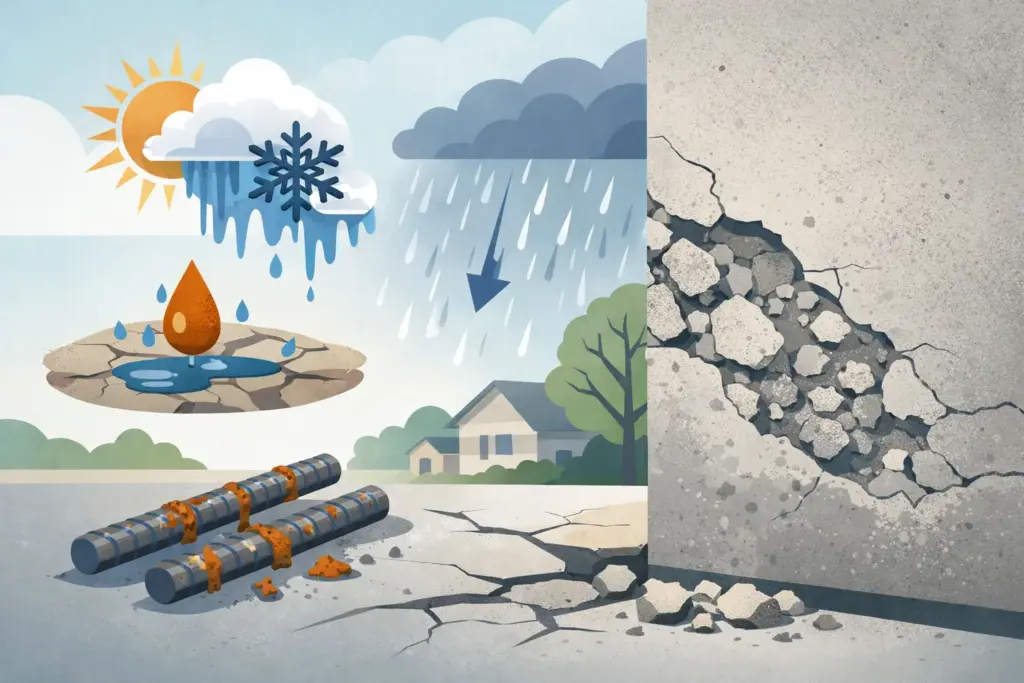
A concrete surface can look solid for years, then suddenly start flaking, chipping, or breaking apart near the top layer. Homeowners often ask what causes concrete spalling outside when a driveway, porch, walkway, or set of steps starts shedding pieces after winter. The short answer is usually moisture getting into the concrete, then pressure building from weather, salt, corrosion, or poor installation.
The longer answer matters, because spalling is not one single problem. It is a visible symptom of deeper stress in the concrete. If you only patch the surface without dealing with the cause, the damage often comes back.
What causes concrete spalling outside most often?
In exterior concrete, the most common cause is water. Concrete may look dense and hard, but it is still porous. Water can move into small capillaries, hairline cracks, and weak surface areas. Once that moisture gets in, it starts a chain reaction.
In colder climates, freeze-thaw cycling is a major factor. Water enters the concrete, temperatures drop, and that water expands as it freezes. The pressure pushes against the surface and gradually breaks it apart. At first, you may see scaling or shallow pitting. Over time, that damage can turn into larger flakes, exposed aggregate, or deeper chunks coming loose.
Deicing salts make the problem worse. Salt does not always cause spalling by itself, but it increases moisture exposure and adds chemical stress. It also encourages more frequent freeze-thaw activity at the concrete surface. That is why driveways, sidewalks, porches, and front steps often show damage first.
Moisture is the real driver behind spalling
Most exterior concrete failures come back to water getting in and not being managed properly. Sometimes that happens because the slab was weak from the start. Sometimes the concrete was fine, but years of exposure wore it down. Either way, once moisture starts cycling through the slab, the surface is at risk.
Poor drainage is one of the biggest contributors. If a patio or walkway holds standing water, that moisture keeps soaking into the surface. If downspouts discharge near concrete, or the grading slopes water toward the slab, the concrete stays wet much longer than it should. The more saturated it stays, the more vulnerable it becomes during cold weather.
This is also why certain locations fail faster than others. A covered concrete area may last much longer than a slab exposed to roof runoff, snow piles, sprinklers, or shaded damp conditions. The concrete itself may be similar, but the moisture exposure is not.
Freeze-thaw damage and why outside concrete breaks down
If you are asking what causes concrete spalling outside in a region with cold winters, freeze-thaw pressure should be near the top of the list. Exterior concrete expands and contracts with changing temperatures. That movement alone is manageable when the concrete is properly mixed, placed, and cured. The problem starts when excess water is trapped inside.
As the moisture freezes, it expands. That repeated internal pressure weakens the bond at the surface. Small sections begin to detach, especially if the top layer was overworked during finishing or if the concrete was never properly sealed. The damage may show up after one hard winter, but more often it builds slowly over several seasons.
Not every freeze-thaw issue looks dramatic right away. Early warning signs include surface dusting, light scaling, shallow pop-outs, and rough patches that seem to spread. Those signs are worth taking seriously, because they often come before larger spalled areas.
Salt damage is common, but it usually works with other problems
Homeowners often blame salt first, and sometimes they are right. Deicing salts are tough on exterior concrete, especially newer concrete and surfaces with weak finishing or poor curing. But salt damage usually acts as an accelerant rather than the only cause.
When salt pulls moisture into the surface and keeps the slab wet, freeze-thaw damage gets worse. Some deicers also contribute to chemical reactions that weaken the surface paste. If the concrete already has poor air entrainment, excess water in the mix, or inadequate curing time, salt exposure can push it over the edge.
This is why one driveway may hold up well while another nearby starts scaling and spalling. The difference is often in the original workmanship, the concrete mix, drainage, curing practices, and how soon deicers were used after installation.
Poor installation can set the stage for spalling
Not all concrete is placed with the same level of care. A slab can look good on day one and still be set up for early failure if the installation was rushed or the mix was wrong.
Too much water in the concrete mix is a common issue. Extra water may make the material easier to place, but it also weakens the finished concrete and increases shrinkage. That creates a more porous surface and a lower resistance to weather exposure.
Overfinishing is another problem. If the installer works the surface too much or finishes while bleed water is still present, the top layer can become weak and vulnerable. It may harden enough to look smooth at first, but it often does not have the strength needed for years of outdoor exposure.
Improper curing also matters. Concrete needs time and moisture control to gain strength. If it dries too fast, cures unevenly, or is exposed to traffic and weather too soon, the surface can be compromised from the beginning.
Air entrainment is especially important for exterior concrete in freeze-prone climates. This process creates tiny air pockets that help relieve internal pressure when moisture freezes. Without it, the concrete has less tolerance for freeze-thaw stress.
Rebar corrosion can cause deeper spalling
When spalling is more severe and chunks of concrete break away instead of just the surface flaking, steel reinforcement may be involved. If water and oxygen reach embedded rebar, the steel can start to rust. As it corrodes, it expands.
That expansion creates internal pressure strong enough to crack and push concrete outward. The result is often larger spalled areas, exposed steel, and structural concern rather than just a cosmetic issue. This type of damage is more common in steps, porches, retaining walls, foundation elements, balconies, and older reinforced concrete surfaces.
Once rebar corrosion starts, patching the visible damage without addressing the rust usually does not last. The source of moisture and the condition of the steel both need to be evaluated.
It depends on the age and condition of the concrete
New concrete and old concrete can both spall, but for different reasons. Newer concrete that starts failing early often points to finishing, curing, mix design, or premature salt exposure. Older concrete may simply be reaching the point where years of water intrusion, surface wear, and seasonal movement have taken a toll.
Hairline cracking can also play a role. Small cracks may not seem serious, but they give water a path into the slab. Once moisture gets below the surface, freeze-thaw cycling can widen the damage from underneath.
That is why repair decisions are not always simple. A small isolated spall in otherwise sound concrete may be repairable. Widespread scaling across a driveway or porch may suggest the entire surface has weakened, making replacement the smarter long-term investment.
How to tell if the problem is cosmetic or more serious
Light surface flaking is often an early-stage issue, but not always a minor one. If the damage is shallow and limited, repairs may be enough. If the concrete sounds hollow, continues shedding material, or shows cracking, movement, or exposed aggregate across large areas, the slab may be failing more broadly.
Watch for rust stains, deep edge breakage, recurring moisture problems, and uneven sections that create a trip hazard. Those signs point to more than just surface wear. Exterior steps, porches, and walkways should be looked at closely because safety is part of the equation.
A good inspection should look beyond the visible chip or flake. The real question is not just where the concrete broke, but why it broke there.
Preventing outdoor concrete spalling
The best prevention is a combination of proper installation and moisture control. Exterior concrete should be placed with the right mix, reinforced where needed, finished correctly, and cured with care. After that, water still needs to be managed through grading, drainage, joint maintenance, and realistic winter care.
Sealing can help in some cases, but it is not a cure-all. A sealer works best on sound concrete and as part of a larger maintenance plan. It will not fix weak concrete, reverse corrosion, or solve drainage problems by itself.
It also helps to be selective with deicers. Some products are less aggressive than others, and newly placed concrete should never be exposed to deicing salts too soon. Even strong concrete benefits from gentle winter maintenance and reduced water exposure.
When spalling has already started, timing matters. Early repair can stop a small issue from spreading. Waiting too long can turn a straightforward surface fix into a larger repair or full replacement job.
If your driveway, steps, porch, or walkway is starting to chip or flake, the surface is telling you something. The right next step is to find the actual cause, fix what is allowing moisture or pressure to build, and repair the concrete in a way that holds up for the long run.