Best Concrete Sealers for Driveways
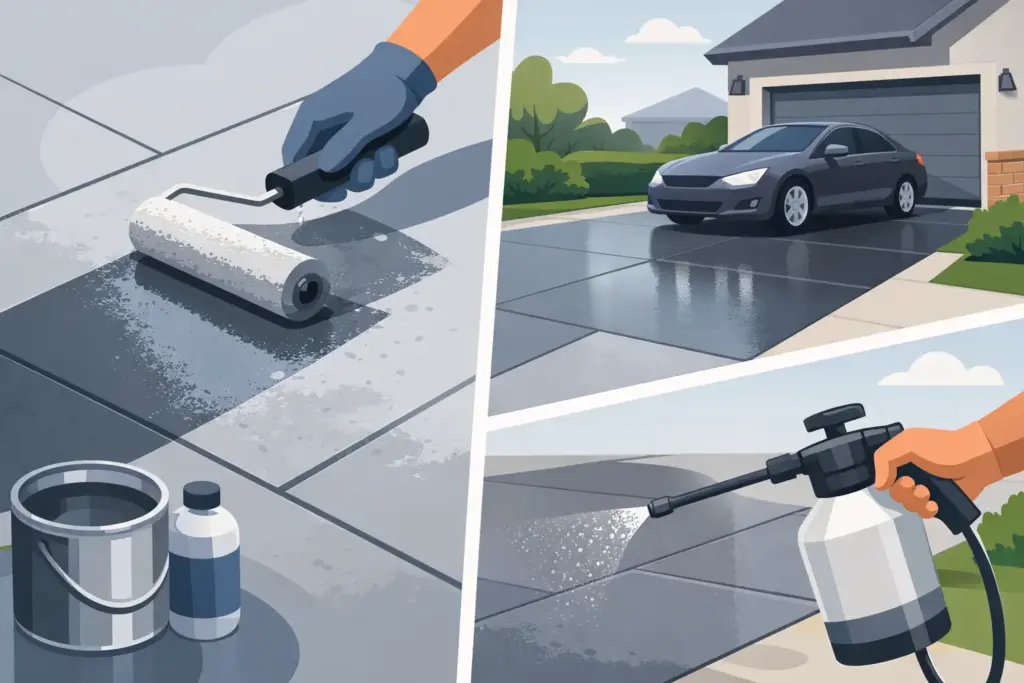
A driveway can look solid on the surface and still start breaking down sooner than it should. Oil spots, road salt, freeze-thaw cycles, sun exposure, and everyday traffic all work against it. That is why choosing the best concrete sealers for driveways matters. The right sealer helps protect your investment, keeps the surface cleaner, and can add years to the life of the concrete when it is applied at the right time.
Not every sealer does the same job, and that is where homeowners often get tripped up. Some products are built to repel water and deicing salts. Others are meant to deepen color, add a sheen, or create a stronger film on the surface. The best choice depends on the age of the driveway, the finish of the concrete, the climate, and how much maintenance you are willing to take on.
What makes the best concrete sealers for driveways?
For a residential driveway, a good sealer needs to do three things well. It should limit water penetration, reduce damage from salt and chemicals, and hold up under vehicle traffic. If it cannot handle those basics, the label does not matter much.
Breathability is also important. Concrete naturally holds and releases moisture. If a sealer traps that moisture, you can end up with whitening, peeling, or flaking over time. That is one reason many contractors prefer penetrating sealers for standard broom-finish driveways, especially in regions with harsh winters.
Appearance matters too, but it should come second to performance. A glossy finish may look sharp on decorative concrete, but for a working driveway, long-term durability usually carries more weight than shine.
The main types of driveway sealers
Penetrating sealers
Penetrating sealers soak into the concrete instead of sitting on top. These include silane, siloxane, siliconate, and blended formulations. In most cases, they are the strongest all-around choice for plain concrete driveways because they help block water and chloride intrusion without forming a slippery surface film.
This type of sealer usually leaves the look of the concrete close to natural. That can be a benefit if you want protection without changing the finish. It also means less risk of peeling compared with topical products. The trade-off is simple - you do not get much visual enhancement, and the surface may still stain if spills sit too long.
Acrylic sealers
Acrylic sealers are topical products that form a thin protective layer over the surface. They are often used when homeowners want a wet look, a slight sheen, or richer color on decorative or stamped concrete. They are available in water-based and solvent-based versions, with different levels of gloss and durability.
For driveways, acrylics can work well in the right situation, but they need more maintenance than penetrating sealers. Traffic, UV exposure, and weather gradually wear the film down. If the product is applied too heavily or over damp concrete, it can also turn cloudy or start peeling.
Epoxy and polyurethane sealers
These coatings create a tougher surface film and can offer strong chemical and abrasion resistance. They are more common in garages and specialty applications than on outdoor driveways. While they can look sharp, they are usually less forgiving outside because direct sun, moisture movement, and temperature swings put more stress on the coating.
For most residential driveways, these are not the first option. If appearance is the top priority and the surface conditions are right, they may have a place. For general outdoor durability, they are often more product than a driveway really needs.
Best sealer type for most driveways
If the goal is practical protection, penetrating sealers usually rank as the best concrete sealers for driveways. They are especially useful on newer standard concrete, exposed aggregate, and surfaces that deal with winter salt or frequent moisture exposure. They help reduce water absorption while still allowing the slab to breathe.
Silane and siloxane blends are often the go-to choice because they penetrate well and offer strong water repellency. On denser concrete, silane can perform especially well. On more porous surfaces, siloxane blends often make sense. A quality product matched to the actual concrete condition will outperform a premium product used in the wrong situation.
If you have decorative concrete and want color enhancement, acrylic sealers become more attractive. Just go into it knowing they will likely need reapplication sooner and may require more careful upkeep.
Water-based vs solvent-based sealers
This is another point where the right answer depends on the driveway.
Water-based sealers generally have lower odor, simpler cleanup, and a more user-friendly application. They are a solid option for many homeowners and often perform well for routine protection. Solvent-based sealers can offer deeper penetration or a richer finish in some formulations, but they usually come with stronger fumes and stricter application needs.
Neither category is automatically better. The actual chemistry matters more than the label on the bucket. A well-made water-based penetrating sealer can outperform a poor solvent-based product without much debate.
When to seal a driveway
Timing matters just as much as product selection. New concrete should not be sealed too early. The slab needs time to cure properly, and sealing before that process is complete can create problems. In many cases, waiting at least 28 days is the baseline, but local weather and mix design can affect the timeline.
Older driveways should be cleaned thoroughly before sealing. That means removing dirt, oil, mildew, and any old failing coating. If cracks or surface damage are already developing, those issues should be addressed first. Sealer is not a repair product. It protects sound concrete, but it will not fix movement, scaling, or structural deterioration.
Dry conditions are also important. Most sealers need a clean, dry surface and a decent weather window to cure correctly. If rain is on the way or temperatures are swinging too low at night, it is better to wait.
How long driveway sealers last
There is no honest one-size-fits-all answer here. Traffic load, weather exposure, snow removal habits, deicing salt use, and surface prep all affect longevity.
As a general range, penetrating sealers may last several years before reapplication is needed, while acrylic sealers often need attention sooner. Some high-performance products last longer, but real-world results still come down to conditions on site. A driveway that gets full sun, plow contact, and winter salt will wear differently than one in a milder setting.
The best approach is to watch how the concrete behaves. If water stops beading or the surface starts darkening quickly when wet, the sealer may be wearing off.
Common mistakes homeowners make
The biggest mistake is choosing based on shine instead of function. A driveway is not the same as an indoor floor. Outdoor slabs need protection that works with the concrete, not just on top of it.
Another common issue is overapplication. More product is not better. Heavy coats can lead to blotchy appearance, poor curing, and surface failure. Following the manufacturer’s spread rate and prep instructions matters.
Skipping repairs is another problem. If the concrete is already cracking, pitting, or flaking, sealing over it may only hide the issue for a short time. The underlying damage will still be there.
How to choose the right sealer for your property
Start with the condition of the driveway. If it is standard gray concrete and your priority is protection from moisture, salt, and seasonal wear, a penetrating silane or siloxane sealer is usually the safest choice. If the surface is decorative and appearance matters just as much as protection, an acrylic may be the better fit.
Then look at your maintenance expectations. If you want lower upkeep and a natural finish, stay with penetrating products. If you are comfortable resealing more often to maintain a richer look, topical products can make sense.
Finally, be honest about the condition of the slab. If the surface is already failing, a sealer should come after repairs, not instead of them. A sound driveway responds well to sealing. A damaged driveway may need crack repair, resurfacing, or replacement before protection becomes worthwhile.
For homeowners who want the job done right the first time, professional assessment can save money and frustration. At Sampson Concrete & Masonry, that practical approach matters because good concrete work is not just about how it looks on day one. It is about how it holds up year after year.
A driveway takes a beating, and the right sealer gives it a fighting chance. Choose for performance first, prep the surface properly, and treat sealing as part of long-term maintenance, not a quick cosmetic fix.