Stamped Concrete vs Pavers: Which Lasts?
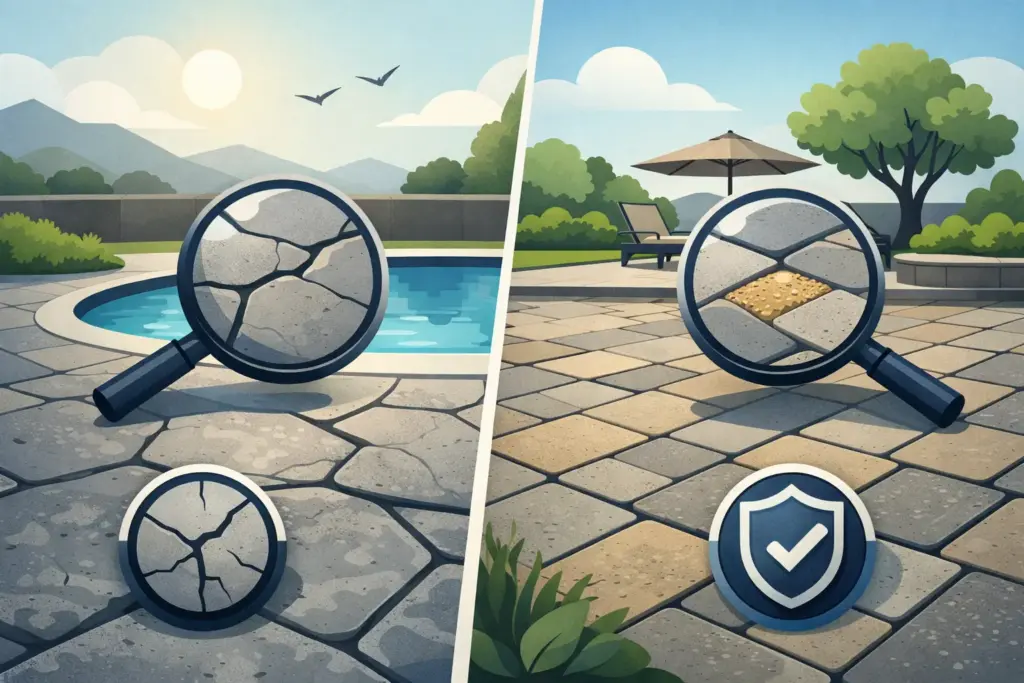
A patio can look great on day one and still become a headache five winters later. That is why homeowners comparing stamped concrete vs pavers should look past the first impression and think about repair costs, maintenance, drainage, and long-term performance. The right choice is not just about appearance. It is about how the surface will hold up under weather, traffic, and everyday use.
Both options can improve curb appeal and add value when they are installed properly. Both can also disappoint when the base work is rushed or the wrong material is used for the space. For a driveway, patio, pool deck, or front walkway, the better option depends on your budget, the look you want, and how much upkeep you are willing to handle over time.
Stamped concrete vs pavers at a glance
Stamped concrete is a poured concrete slab finished with texture and pattern to imitate stone, brick, slate, or tile. It gives you a decorative surface with a more continuous look. Pavers are individual units, usually concrete or brick, laid one by one over a prepared base. They create a more segmented surface with joints between each piece.
The biggest practical difference is simple. Stamped concrete acts like one slab. Pavers act like a system of many pieces. That affects cracking, repairs, movement, drainage, and installation cost.
If you want a cleaner, more uniform surface at a lower upfront price, stamped concrete often makes sense. If you want easier repairability and more flexibility over time, pavers usually have the edge.
Appearance and design flexibility
For many homeowners, looks drive the first call. Stamped concrete can deliver a high-end decorative finish without the price of natural stone. It works well when you want large pattern fields, curved patios, bordered sections, or a custom color that complements the house. A skilled crew can create a sharp, finished appearance that feels upgraded without looking busy.
Pavers offer a different kind of visual appeal. Instead of one continuous decorative slab, you get texture, joint lines, and a more traditional hardscape look. They come in many shapes, colors, and laying patterns, which gives you design flexibility. If your home already has brick, stone, or detailed masonry features, pavers often tie in naturally.
This is one of those decisions where taste matters. Some homeowners prefer the smooth, unified look of stamped concrete. Others like the depth and character that pavers bring. Neither is automatically better. It depends on the style of the home and the finish you want around it.
Cost: what you pay now and later
Stamped concrete usually costs less upfront than pavers, especially for larger surface areas. That makes it attractive for homeowners who want decorative results without stretching the budget too far. Because it is poured and finished as one slab, labor can be more efficient than placing and aligning individual pavers.
Pavers typically cost more at the start because of material cost and installation time. The base still has to be done right, and the laying process is more labor-intensive. On a simple patio, the price gap may be manageable. On a large driveway or multi-level outdoor area, the difference can become more noticeable.
The long-term cost story is where things shift. If stamped concrete cracks, settles, or spalls, repairs are harder to blend. Fixing one section may leave a visible patch. With pavers, individual pieces can be lifted and replaced if needed, and repairs are usually more localized. That can reduce future frustration, especially in areas prone to movement.
A lower upfront price is not always the lower ownership cost. It depends on the site conditions and how much maintenance or repair you may face later.
Durability and weather performance
Durability is where homeowners need an honest answer, not a sales pitch. Both stamped concrete and pavers can last for years when installed over a proper base by experienced professionals. Both can also fail early if shortcuts are taken.
Stamped concrete is strong and performs well in patios, walkways, and many residential exterior spaces. But because it is one slab, it is more vulnerable to visible cracking. Concrete naturally expands and contracts. Control joints help manage that movement, but they do not eliminate the possibility of cracks.
Pavers are better at handling small shifts in the ground because they are made of separate pieces with joints between them. That gives the system more flexibility. In freeze-thaw climates or areas with minor settling, that flexibility can be a real advantage.
For driveways, the conversation gets even more specific. A stamped concrete driveway can look excellent and perform well, but it must be installed with the right thickness, reinforcement, base preparation, and finishing methods. Paver driveways can also perform well, though the base work is critical there too. If the subgrade is weak or drainage is poor, neither material will save the job.
Maintenance and repair
Stamped concrete needs sealing to maintain its appearance and help protect the surface. Over time, the sealer can wear down, especially in high-traffic areas or harsh weather. Resealing is part of owning decorative concrete. You may also need occasional cleaning to keep the color and pattern looking sharp.
Pavers also need maintenance, but it is different. Joint sand can wash out or settle and may need replenishing. Weeds can become an issue if the joints are neglected. Some paver systems benefit from sealing as well, especially if you want color enhancement or added stain resistance.
The biggest difference shows up when damage happens. If one section of stamped concrete is chipped, stained, or cracked badly, repair options are more limited. If a few pavers are damaged or a section settles, those pieces can often be removed, the base corrected, and the area reset.
That does not mean pavers are maintenance-free. It means they are more forgiving when isolated repairs are needed.
Which is better for patios, walkways, and driveways?
For patios, stamped concrete is often a strong choice when homeowners want decorative impact and solid value. It creates a finished, intentional look and works especially well in backyards where the goal is clean entertaining space with custom style.
For walkways, either option can work well. Stamped concrete gives a crisp, continuous path. Pavers bring more texture and traditional character. If the walkway crosses areas where tree roots, drainage changes, or settling may become issues, pavers may offer a safer long-term bet because repairs are simpler.
For driveways, the answer is more dependent on conditions. Heavy use, vehicle weight, turning tires, and winter exposure all matter. Some homeowners choose stamped concrete for a refined appearance and lower initial investment. Others prefer pavers because of their repair flexibility and ability to handle movement. This is where site evaluation matters most.
When stamped concrete makes more sense
Stamped concrete is usually the better fit when budget matters, the design calls for a broad decorative surface, and the area has stable soil and proper drainage. It also suits homeowners who want an upgraded look without the higher labor cost of pavers.
It can be an excellent choice for patios, porch areas, and walkways where appearance is important and structural conditions are favorable. When the installation is done correctly, stamped concrete offers a durable, attractive surface that elevates the whole property.
When pavers are worth the extra cost
Pavers often make more sense when long-term repairability is a priority, when the ground may shift over time, or when you want a more classic hardscape finish. They are also a smart option for homeowners who are willing to pay more upfront for flexibility later.
In areas where freeze-thaw cycles, settling, or drainage concerns are more likely, pavers can provide peace of mind. If one area moves, you are not dealing with the same repair challenge that comes with a cracked decorative slab.
The real deciding factor: installation quality
Homeowners often compare materials and miss the bigger issue. The best-looking stamped concrete will fail if the base is poor, the mix is wrong, or the finishing is rushed. The highest-quality pavers will not perform well if they are laid over weak preparation.
This is why contractor experience matters as much as material choice. Proper grading, solid base preparation, correct thickness, drainage planning, clean finishing, and attention to detail all affect the result. A surface is only as good as what is under it and how it was built.
At Sampson Concrete & Masonry, that is where the focus stays - workmanship first, appearance second, and no shortcuts on what keeps the job sound.
If you are deciding between stamped concrete and pavers, do not start with what looks best in a photo. Start with how the space will be used, what the site conditions are, and how long you expect that surface to serve your home. The right choice is the one that still feels like a good investment years after the installation crew is gone.