7 Best Concrete Finishes for Driveways
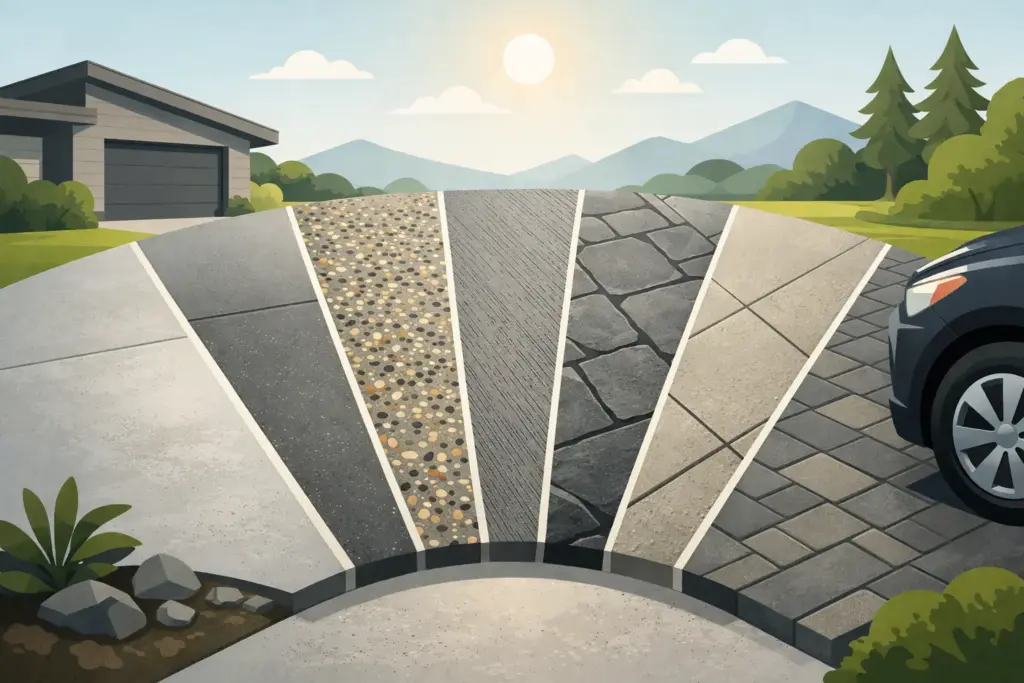
A driveway has to do more than look good from the street. It has to handle vehicle weight, freeze-thaw cycles, rain, road salt, and daily wear without turning into a maintenance problem. That is why choosing the best concrete finishes for driveways is not just a style decision. It affects traction, appearance, long-term durability, and how much upkeep you are signing up for.
Some finishes are built for clean function. Others lean harder into curb appeal. The right choice depends on how you use the driveway, the look of your home, your local weather, and how much maintenance you are comfortable with over time.
What makes the best concrete finishes for driveways?
The best finish is the one that matches the job. A steep driveway needs reliable grip. A front-facing driveway with strong curb appeal goals may justify a more decorative finish. A rental or multi-vehicle property often benefits from something straightforward, durable, and easy to patch if needed.
For most homeowners, the main factors are traction, durability, appearance, maintenance, and price. Those priorities do not always point to the same finish. A finish that looks high-end may need more sealing. A finish with excellent slip resistance may be more basic visually. Good driveway planning means understanding those trade-offs before the concrete is poured.
Broom finish: the practical standard
A broom finish is one of the most common choices for driveways, and for good reason. After the concrete is placed and leveled, a broom is pulled across the surface to create a light texture. That texture improves traction and gives the driveway a clean, finished look without pushing the cost too high.
For many homes, this is the best balance of performance and value. It is dependable, easy to keep clean, and well suited to everyday residential use. If your top concerns are grip, durability, and cost control, a broom finish is hard to beat.
The main drawback is that it is more functional than decorative. It can still look sharp when installed properly with clean edges and control joints, but it will not create the custom visual effect that some homeowners want.
Exposed aggregate: strong texture with more visual appeal
Exposed aggregate is made by removing the top layer of cement paste to reveal the stone within the concrete mix. The result is a textured surface with a more decorative appearance than standard broom concrete. It is a popular option for homeowners who want something more distinctive without going all the way to stamped patterns.
This finish offers solid traction, which makes it a practical choice for driveways that see rain, snow, or foot traffic. It also hides minor surface dirt and wear better than some smoother finishes.
The trade-off is that exposed aggregate takes more care during installation. The reveal has to be consistent, and the surface needs proper sealing to protect its appearance. If it is done poorly, the finish can look uneven. If it is done well, it can add real character and value to the front of the property.
Stamped concrete: high-end look, higher maintenance
Stamped concrete is designed to mimic brick, stone, slate, or other textured materials. For homeowners focused on curb appeal, this is often one of the most attractive options available. It gives you the look of individual pavers or natural stone without the same installation method.
Stamped concrete can work well for driveways, but it is not always the automatic best choice. It generally costs more than broom or exposed aggregate, and it needs proper sealing to maintain color and protect the surface. In colder climates, especially where de-icing products are used, that maintenance matters.
Traction also depends on the pattern and sealer used. Some stamped surfaces can become slick when wet if they are over-sealed or finished too smooth. That does not mean stamped concrete is a bad option. It means the design needs to be chosen carefully for driveway use, not just for appearance.
Smooth trowel finish: better for indoors than driveways
A smooth trowel finish creates a clean, dense surface, but it is usually not recommended for exterior driveways. On garage floors, basements, and some interior slabs, it works well. On a driveway, it can become slippery when wet or icy.
This is one of the clearest examples of why the best-looking finish on paper is not always the best-performing one in the field. A smoother finish may seem easier to clean, but reduced traction is a serious drawback where cars and foot traffic are involved.
In most residential driveway applications, contractors steer away from this finish unless it is being combined with another texture strategy. For a standard driveway, there are better and safer options.
Salt finish: subtle texture, understated appearance
A salt finish is created by pressing coarse rock salt into the surface of fresh concrete and washing it away after the slab sets. This leaves behind small shallow pits that add texture and a softer decorative look than a broom finish.
For homeowners who want a surface that feels a little more refined without going heavily decorative, salt finish can be a good middle ground. It has visual interest, decent traction, and a more custom appearance than plain concrete.
Its limitations are mostly regional and practical. In areas where de-icing salts are heavily used, some homeowners prefer a finish that is easier to maintain and seal over time. The appearance is also more subtle, so if you want a strong design statement, stamped or exposed aggregate may deliver more impact.
Swirl or decorative broom finish: simple but sharper
A standard broom finish does not have to be plain. Decorative broom patterns, including swirl finishes or angled broom lines, can give a driveway a more custom look while keeping the same practical benefits of textured concrete.
This option works well for homeowners who want visual detail without the price or maintenance level of stamped concrete. The driveway still performs like a traction-friendly broom finish, but the final appearance feels more intentional and tailored to the home.
It is not as dramatic as decorative aggregate or stamping, but that is part of the appeal. You get a clean, durable finish with a little more personality and very few downsides.
Colored concrete finishes: appearance first, with planning
Color can be added to several driveway finishes, including broom, stamped, and exposed aggregate. Integral color or surface-applied color can help the driveway complement brick, siding, stonework, or landscaping. When done right, it gives the whole front elevation a more finished look.
The key is to treat color as an enhancement, not a finish by itself. The underlying texture still matters for safety and performance. A colored broom finish, for example, can be a smart option if you want both traction and upgraded curb appeal.
Keep in mind that colored concrete usually adds cost and may require more consistent sealing to maintain appearance. It also needs careful installation to avoid visible variation. For homeowners who care about aesthetics, that investment can be worth it. For purely functional projects, standard gray concrete may make more sense.
How to choose the right driveway finish for your home
If your priority is dependable performance and value, broom finish is usually the safest bet. It handles daily use well, provides traction, and fits most budgets. If you want a stronger decorative effect with good slip resistance, exposed aggregate is a solid upgrade.
If curb appeal is a major goal and you are willing to stay on top of sealing and maintenance, stamped concrete can create a premium look. If you want something more subtle than stamped but less basic than standard broom, salt finish or decorative broom patterns are worth a look.
A good contractor will also consider slope, drainage, joint layout, concrete mix, base preparation, and local weather. The finish matters, but it is only one part of a driveway that lasts. Even the best finish will not perform well if the installation underneath it is rushed or undersized.
Best concrete finishes for driveways by priority
If you are choosing based on safety and traction, broom and exposed aggregate usually come out on top. If you are choosing based on appearance, stamped concrete and colored finishes tend to lead the conversation. If you want the most balanced all-around result, a well-installed broom finish or decorative broom finish often gives homeowners the fewest regrets.
That is usually the real goal. Not the flashiest option on day one, but the finish that still looks good and performs well after years of weather, vehicle traffic, and seasonal wear.
A driveway is one of the first things people notice about a property, but it also takes some of the hardest abuse. Choosing carefully now saves repairs, frustration, and added costs later. If you are weighing options for a new driveway, it helps to talk with an experienced contractor who can match the finish to your home, your budget, and the way your property is actually used.