Residential Demolition Services Explained
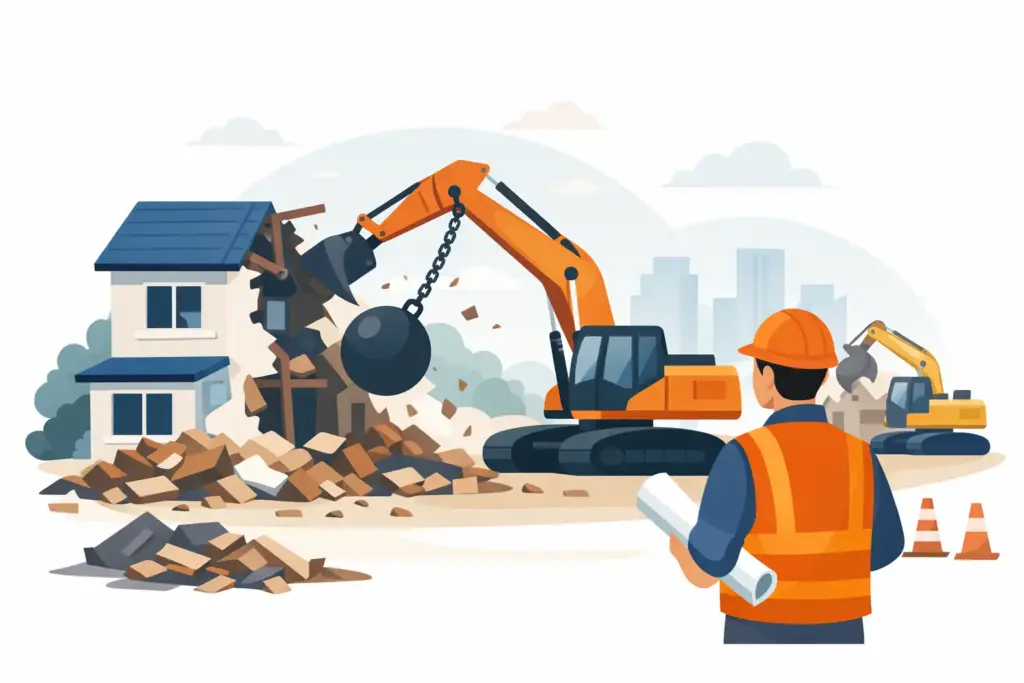
A cracked garage slab, a failing porch, or an old shed that is starting to lean usually does not stay a small problem for long. Residential demolition services help homeowners clear unsafe, outdated, or damaged structures so the next phase of work can start on solid ground.
For many property owners, demolition sounds simple until the real questions start. What exactly needs to come down? Can part of the structure stay? Will the surrounding concrete, brick, landscaping, or foundation be protected? The quality of demolition work affects everything that comes after it, from site safety to the finish of the new installation.
What residential demolition services actually include
Residential demolition services cover much more than knocking something down. On a well-run project, the work starts with a site review, a clear scope, and a plan for safe removal. That can include tearing out concrete patios, driveways, stairs, porches, walkways, sheds, detached garages, small accessory structures, damaged masonry, and sections of failing exterior construction.
Some projects call for full removal. Others need selective demolition, where only part of the structure is taken out so the surrounding area can be repaired or rebuilt. That distinction matters. If a homeowner is replacing a front porch but keeping nearby steps, railings, or brickwork, the contractor needs to remove the damaged section cleanly without creating more repair work than necessary.
In residential work, precision matters just as much as power. A careless crew can damage adjacent foundations, crack nearby slabs, or disturb masonry that was supposed to remain intact. A skilled contractor treats demolition as the first step of construction, not a separate task.
When demolition is the better option
Homeowners often ask whether repair is enough. Sometimes it is. If the problem is limited to surface wear, isolated cracks, or small sections of mortar failure, repair may be the smarter investment. But there are cases where replacement starts to make more financial and structural sense.
If concrete has widespread cracking, severe settling, poor drainage issues, or repeated patch failures, demolition and replacement may provide a longer-lasting result. The same goes for masonry features that have shifted, separated, or lost structural stability. Repeated small fixes can add up fast, especially when the base beneath the structure is already compromised.
Safety is another clear reason to move forward with demolition. Unstable steps, collapsing retaining walls, loose chimney sections, broken slabs, and rotted accessory structures create liability for homeowners and real risk for family members and visitors. In those cases, waiting usually increases cost rather than reducing it.
Partial demolition vs full demolition
Not every project needs a complete teardown. Partial demolition is often the right fit when one feature has failed but the rest of the property remains in good shape. A common example is removing an old concrete driveway while preserving a nearby walkway or foundation wall. Another is taking out damaged porch concrete before rebuilding the entrance with updated dimensions and finish options.
Full demolition makes more sense when the entire structure is beyond repair, when the materials are inconsistent, or when the site needs to be completely reworked. If a detached garage pad, surrounding apron, and access path all have major deterioration, piecing around the damage may cost more in the long run than starting fresh.
This is where experience matters. A contractor should be able to tell you when selective removal is practical and when full removal protects the quality of the new build. There is no benefit in saving part of a structure if it weakens the finished result.
What to expect during a residential demolition project
A professional demolition job should feel organized from the beginning. First comes the evaluation. The contractor looks at the structure, access points, material type, surrounding surfaces, and any conditions that could affect removal. Concrete demolition is different from masonry demolition, and both require different handling than wood-framed accessory structures.
Next comes planning for protection and disposal. That includes controlling dust, managing debris, protecting nearby property, and using the right equipment for the scale of the work. On residential sites, access is often tighter than people expect. Fences, neighboring homes, landscaping, and overhead lines can all affect how demolition is performed.
Then the removal begins. A good crew works methodically, separating materials where needed and keeping the site controlled throughout the process. Clean-up is not an extra. It is part of the job. Once demolition is complete, the site should be left ready for the next stage, whether that is forming new concrete, rebuilding masonry, or preparing for another structural improvement.
Why clean execution matters
Demolition is rough work, but the result should still be clean. That is especially true when the same contractor is handling the rebuild. If the removal leaves jagged transitions, damaged adjoining surfaces, or unstable subgrade conditions, the replacement work starts at a disadvantage.
Clean execution protects both appearance and performance. For example, if an old patio is removed for replacement, the edges near the home, steps, or landscaping need to be handled carefully. If a section of damaged brick or block is demolished, the remaining structure must be preserved so the new work ties in properly.
This is one reason many homeowners prefer working with a contractor who understands concrete, masonry, structural repair, and demolition as connected trades. The job is not just about what gets removed. It is about preparing the property for durable, good-looking work that lasts.
Cost factors homeowners should understand
Demolition pricing depends on scope, access, material, and disposal requirements. A small shed removal is very different from tearing out a thick reinforced concrete slab or removing a deteriorated porch tied into masonry steps.
The main cost factors usually include the size of the area, thickness and type of material, equipment needs, labor intensity, haul-away volume, and site restrictions. Limited access can increase labor time because larger machinery may not fit. The presence of nearby structures can also slow the process because more protection and more careful removal are required.
Homeowners should be cautious about choosing the lowest number without understanding what is included. One quote may account for full debris removal, site protection, and proper preparation for rebuild, while another may only cover basic tear-out. A lower upfront price can lead to added costs later if the site is left uneven, messy, or damaged.
Choosing the right contractor for residential demolition services
When hiring for residential demolition services, look for more than equipment. You want a contractor who understands structures, site conditions, and what comes next after removal. That matters even more if the demolition is tied to a new driveway, porch, foundation repair, basement walkout, or masonry rebuild.
Ask practical questions. Will the contractor protect surrounding surfaces? Is debris haul-away included? Can they identify whether parts of the structure should be preserved? Do they also understand the rebuild side of the project? A dependable contractor should be able to explain the process clearly and point out any conditions that may affect cost, timing, or scope.
It also helps to work with a company that values workmanship, not just speed. Fast demolition done poorly creates delays. Careful demolition done right keeps the full project moving. That is the approach homeowners can expect from Sampson Concrete & Masonry - straightforward communication, experienced field judgment, and work performed with the next phase in mind.
Residential demolition services and property value
Removing a failing structure is not only about appearance. It protects value by addressing hazards, correcting deterioration, and making room for proper replacement. An old cracked driveway, unstable porch, or broken concrete walk can drag down curb appeal and create concerns for buyers, appraisers, and insurers.
The upside is that demolition often opens the door to a better finished product. Once damaged materials are removed, homeowners can rebuild with stronger concrete, updated masonry, safer access points, and a cleaner design that fits the home. What starts as a removal project often becomes an upgrade that improves both use and presentation.
That is why demolition should be viewed as part of the investment, not just a preliminary cost. The quality of the tear-out affects the quality of what replaces it.
If you are looking at a worn-out slab, unsafe steps, or a structure that has clearly reached the end of its life, it helps to get a professional opinion before the damage spreads. The right plan can save time, reduce wasted repair dollars, and give your next project a strong place to start.