Is Stamped Concrete Slippery?
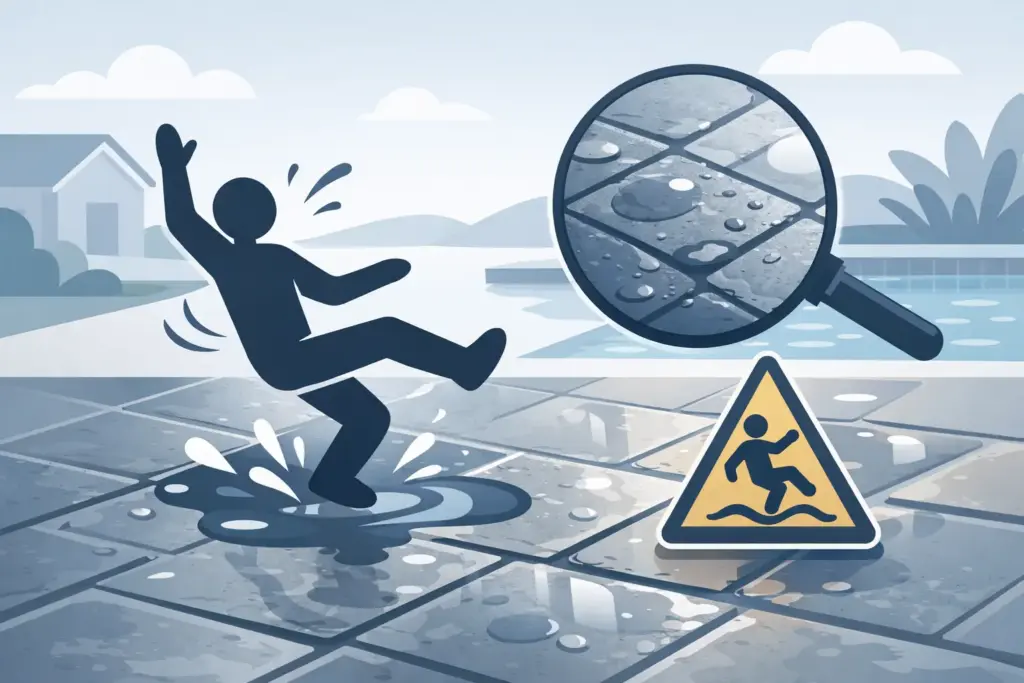
A stamped patio can look sharp on day one and still become the part of the yard everyone tiptoes across after rain if the finish is handled the wrong way. So, is stamped concrete slippery? It can be, but that is not the whole story. The real answer depends on the stamp pattern, the sealer, the location, and whether the installer builds traction into the surface from the start.
Homeowners usually ask this question when they are choosing a patio, porch, pool deck, or walkway and trying to balance appearance with safety. That is the right way to think about it. Decorative concrete should not just look good from the street or backyard. It should also feel solid underfoot in wet weather, during freeze-thaw conditions, and through normal daily use.
Is stamped concrete slippery when wet?
Stamped concrete is not automatically slippery, but it can become slick when wet if the surface is too smooth or sealed incorrectly. This happens most often when a glossy film-forming sealer is applied heavily over a pattern that does not have much texture. Water stays on the surface, shoes lose grip, and what should be a durable outdoor feature starts feeling unsafe.
Texture makes a major difference. A stamped finish designed to mimic slate, stone, or rough-cut flagstone generally offers better traction than a flatter pattern with shallow detail. Even with a good pattern, though, the final result still depends on the finishing process. If the installer overworks the surface, chooses the wrong sealer, or skips an anti-slip additive where needed, the surface can look great and still perform poorly.
This is why the question should not just be whether stamped concrete is slippery. The better question is whether it is being installed for the specific conditions around your home.
What makes stamped concrete slippery?
Several factors affect traction, and they work together more than most people realize. The first is the amount of texture in the stamp itself. Deeper joints, natural edges, and irregular surfaces usually provide more grip than patterns with broad, smooth areas.
The second factor is the sealer. Sealers protect color, help with stain resistance, and extend the life of the finish, but not all sealers behave the same way. A high-gloss sealer can make the surface more slippery, especially after rain. A matte or lower-sheen finish often gives a more natural look and better footing.
The third factor is location. A front walkway, a covered porch, and a pool deck do not face the same conditions. Pool areas are exposed to constant splashing. Shaded walkways may stay damp longer. North-facing sections can hold moisture, algae, or mildew. In cold climates, ice and snow also change the equation. A surface that feels fine in summer may become more hazardous in winter if drainage and finish details were not planned properly.
Maintenance matters too. Dirt, pollen, leaves, and algae can all reduce traction. Sometimes homeowners blame the concrete when the actual issue is buildup on top of the sealer.
Where slipperiness becomes a bigger concern
Some stamped concrete areas need more attention than others. Pool decks are the obvious example because they stay wet and see a lot of bare feet. If you want stamped concrete around a pool, the finish needs to be selected carefully, and slip resistance should be treated as a priority, not an upgrade.
Exterior stairs are another area where there is less room for error. A decorative finish on stairs can look excellent, but safety has to come first. Deep texture, proper pitch, consistent riser heights, and the right sealer all matter more here than decorative shine.
Walkways and entry paths also deserve a practical approach. These are high-traffic areas used in rain, frost, and snow. If someone is carrying groceries or rushing to the door, even a moderately slick surface can become a problem.
Patios are a little different. They can usually tolerate more decorative flexibility because foot traffic is slower and users are more aware of the surface. Even so, if a patio connects to steps, grilling areas, or a basement walkout, traction still needs to be part of the planning.
How to make stamped concrete safer
The good news is that most traction problems can be prevented before the concrete is ever poured. Pattern selection is the first step. A texture that mimics natural stone usually performs better than one chosen purely for appearance. Homeowners often focus on color and border design, but the feel of the surface underfoot is just as important.
Sealer choice comes next. A reliable contractor will not treat every stamped slab the same. The right product depends on where the concrete is going, how exposed it is, and how much foot traffic it will get. In many cases, an anti-slip additive can be mixed into the sealer to improve grip without ruining the finished look.
Proper drainage is another part of the safety picture. If water sits on the slab, traction drops. A patio or walkway should be sloped correctly so water moves away from the house and off the surface instead of pooling in low spots.
Routine cleaning also helps more than people expect. A stamped surface covered in organic growth, grime, or old sealer buildup will be more slippery than one that is cleaned and maintained on schedule. Resealing should be done when needed, not just layered on repeatedly to chase more shine.
Is stamped concrete more slippery than broom-finished concrete?
In most cases, yes. A broom-finished slab usually provides more traction because it has a deliberately rough surface designed for grip. That makes it a strong choice for utility areas, sidewalks, and driveways where function comes first.
Stamped concrete trades some of that raw traction for appearance. That does not make it a bad option. It just means it has to be built with more care. If you want the decorative value of stamped concrete, you need a contractor who understands how to manage that trade-off instead of pretending it does not exist.
For many homeowners, the right answer is not choosing one finish over the other across the whole property. It is using each finish where it makes the most sense. A backyard patio may benefit from stamped concrete, while a side walkway or service path may be better with a broom finish.
Can sealed stamped concrete be fixed if it is too slick?
Yes, but the fix depends on what caused the problem. If the sealer was applied too heavily or the wrong product was used, the surface may need to be stripped or recoated with a better sealer. In some cases, adding a non-slip additive during resealing improves traction enough to solve the issue.
If the pattern itself is too smooth and the slab is in a wet area, options are more limited. Surface treatments may help, but they will not completely change the underlying texture. That is why getting it right during installation is always the better route.
For older stamped concrete, cleaning can also improve footing. Mold, algae, and residue can make a decent surface feel much worse than it really is. Homeowners sometimes assume the concrete is the issue when the real problem is neglect or improper maintenance.
What homeowners should ask before installing stamped concrete
Before moving forward, ask how the surface will perform in rain, not just how it will look when it is dry. Ask what sealer will be used, whether an anti-slip additive is recommended, and which patterns offer the best traction for your project. If the concrete is going near steps, a pool, or a shaded walkway, say so early.
A dependable contractor should be able to explain the trade-offs clearly. Decorative concrete is not one-size-fits-all. The right installation comes from matching the finish to the conditions on your property.
That practical approach is what protects both appearance and value. A stamped patio or walkway should give you curb appeal, durability, and confidence every time someone walks across it. At Sampson Concrete & Masonry, that is how we look at every decorative concrete project - not just as a surface, but as a long-term part of how your property works.
If you like the look of stamped concrete, do not let the slipperiness question scare you off. Let it guide the conversation. When the pattern, sealer, drainage, and finish are handled properly, stamped concrete can give you the appearance you want without creating a safety problem you did not bargain for.