How to Rebuild Brick Steps the Right Way
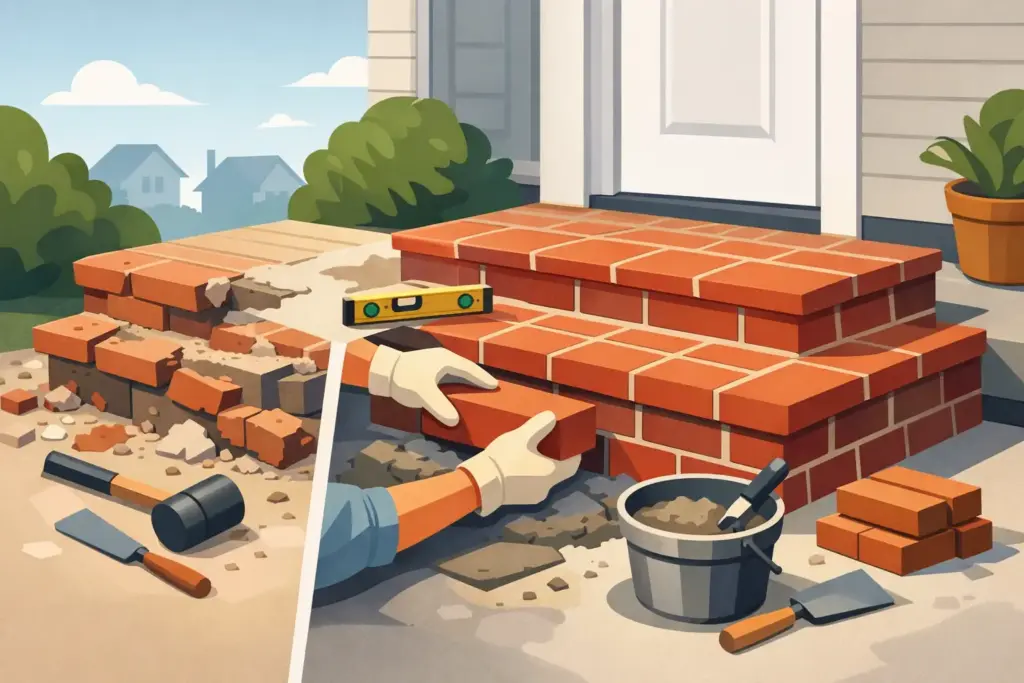
A brick step rarely fails all at once. More often, you first notice a loose edge, cracked mortar joint, or one tread that feels slightly hollow underfoot. Then one winter later, the front steps are shifting, bricks are popping loose, and what looked cosmetic turns into a safety problem. If you are wondering how to rebuild brick steps, the real answer starts below the surface. Good-looking brickwork matters, but the base, drainage, and layout are what determine whether the repair lasts.
When brick steps need a full rebuild
Not every set of steps needs to be torn out. In some cases, spot repointing or resetting a few loose bricks is enough. But if the steps are leaning, settling, separating from the porch, or showing widespread mortar failure, patchwork usually buys very little time. Water gets in, freezes, expands, and keeps opening the same weak points.
A full rebuild is often the better investment when the structure underneath has failed. That can mean a cracked concrete core, a washed-out base, poor compaction, or years of moisture infiltration. If the steps feel unstable or the rise and run are inconsistent, rebuilding them properly is usually the safest path.
How to rebuild brick steps without repeating the same failure
The biggest mistake homeowners make is focusing only on the visible brick. Brick is the finish. The structure underneath does the heavy lifting. If you rebuild over a bad base, use the wrong mortar, or ignore water movement, the steps can start breaking down again much sooner than expected.
That is why brick step rebuilding is part masonry, part structural repair. The job needs careful demolition, a stable foundation, accurate measurements, and clean brick installation. Appearance matters, but durability comes first.
Start with the cause of failure
Before any demolition begins, identify why the steps failed. In many homes, the issue is not the brick itself. It is trapped water, movement in the underlying concrete, settlement at the landing, or years of salt exposure. Sometimes the original steps were built with weak mortar or without enough support at the front edge.
If the steps are attached to a porch or foundation wall, check for separation cracks where the structures meet. If there is sagging in the middle or uneven tread lines, there may be base settlement underneath. If only the outer faces are failing while the center remains solid, the veneer may have detached from the backing structure.
You cannot rebuild well until you know what went wrong the first time.
Demolition should be controlled, not rushed
To rebuild correctly, remove all failed brick, loose mortar, and any unstable substrate. If the steps have a concrete or block core, inspect it closely once the brick is off. Hairline surface cracks are one thing. Major cracking, crumbling edges, or hollow spots usually mean the core also needs repair or replacement.
Clean demolition matters because new mortar does not bond well to dusty, broken, or contaminated surfaces. If salvageable brick will be reused, it needs to be cleaned thoroughly and sorted. Damaged units should be discarded. Trying to save every brick often weakens the finished result.
Rebuilding the base is what makes the job last
If you ask experienced masons how to rebuild brick steps so they hold up, they will usually start with the base. This is where long-term performance is won or lost.
For ground-supported steps, the soil below must be stable and properly compacted. Soft spots, organic material, and poorly compacted fill lead to settlement. A compacted gravel base helps with both support and drainage. In freeze-thaw climates, this is especially important because standing water below the steps can create movement over time.
If the design includes a concrete pad or structural core, it must be sound, level, and built to carry the brick facing and daily traffic. The dimensions need to account for final brick thickness, mortar joints, and nosing details. Rushed measurements at this stage show up later as uneven treads or awkward overhangs.
Check rise, run, and consistency
Even attractive brick steps are a problem if they are uncomfortable or unsafe to use. Each riser should be consistent, and each tread depth should match. A difference of even a small amount can feel awkward underfoot and create a trip hazard.
That is why layout matters before mortar is mixed. Dry-fitting the first course, checking finished heights, and confirming the final top elevation against the porch or entry door can prevent expensive corrections later. This is not the stage to eyeball it.
Use the right mortar for the application
Mortar selection depends on the brick type, exposure conditions, and structural needs. A mortar that is too hard can damage some brick over time. A mortar that is too weak may not handle weather and traffic well. The right mix balances bond strength, flexibility, and durability.
This is also where workmanship shows. Mortar joints should be full, uniform, and properly tooled. Voids behind the face brick create places for water to collect. Sloppy joints hurt both performance and appearance. On entry steps, every detail is visible.
Laying brick steps for strength and appearance
Once the substrate is ready, brick installation should follow a clear pattern and a level reference line. The first course matters most because every course above it depends on that alignment. If the base course is off, the error compounds as the work goes up.
Bricks should be laid with full mortar coverage and tight control of joint thickness. Face alignment should stay consistent across risers and returns. If reclaimed brick is used, color and size variation need to be managed carefully so the finished steps look intentional rather than patched together.
The tread surface deserves extra attention. Brick treads must be stable, slightly pitched to shed water, and firmly bonded. Flat surfaces that trap moisture break down faster, especially in cold weather. Edge bricks at the nosing also take more wear than the rest of the installation, so they must be set securely.
Drainage is not optional
One reason brick steps fail early is simple: water has nowhere to go. If runoff from the porch lands directly on the steps, or if the treads are dead level, moisture sits in the masonry. Over time that leads to mortar damage, brick face spalling, and movement.
A proper rebuild should direct water away from the house and away from the stair assembly where possible. That may involve slight pitch adjustments, cleaner transitions at the landing, or improvements to surrounding grading. In some cases, the steps themselves are solid, but nearby drainage is what keeps damaging them.
Should you rebuild brick steps yourself or hire a mason?
That depends on the condition of the steps and the standard you expect. A small garden step with no structural role is one thing. Front entry steps tied into a porch, foundation, or landing are another.
DIY brick step work often goes wrong in familiar ways. The old base is left in place without proper inspection. The layout ends up uneven. Mortar joints are inconsistent. Water control is overlooked. The result may look acceptable for a short time, but movement and weather expose the weak points fast.
Hiring a professional makes more sense when the steps are structural, heavily used, visibly settled, or tied into other masonry. This is especially true when matching existing brick, correcting grade issues, or rebuilding around a concrete core. A good mason is not just setting brick. They are rebuilding a stair system that needs to be safe, square, durable, and finished cleanly.
For homeowners focused on curb appeal, that matters just as much as strength. Front steps are one of the first things people notice. Crooked lines, mismatched joints, and patched repairs stand out immediately.
What a quality rebuild should deliver
A properly rebuilt set of brick steps should feel solid underfoot, drain correctly, and complement the home instead of looking like an afterthought. The lines should be straight, the joints should be clean, and the dimensions should be comfortable and consistent. More importantly, the structure below the brick should be built to resist the same problems that caused the original failure.
That is the standard serious contractors work toward. At Sampson Concrete & Masonry, that means treating brick steps as both a structural element and a finish feature - not just a quick repair.
If your steps are loose, sunken, or breaking apart, the right fix is not always the fastest one. But rebuilding them correctly protects safety, improves the look of the entry, and saves you from paying twice for the same problem.