Concrete Patio Installation Cost Explained
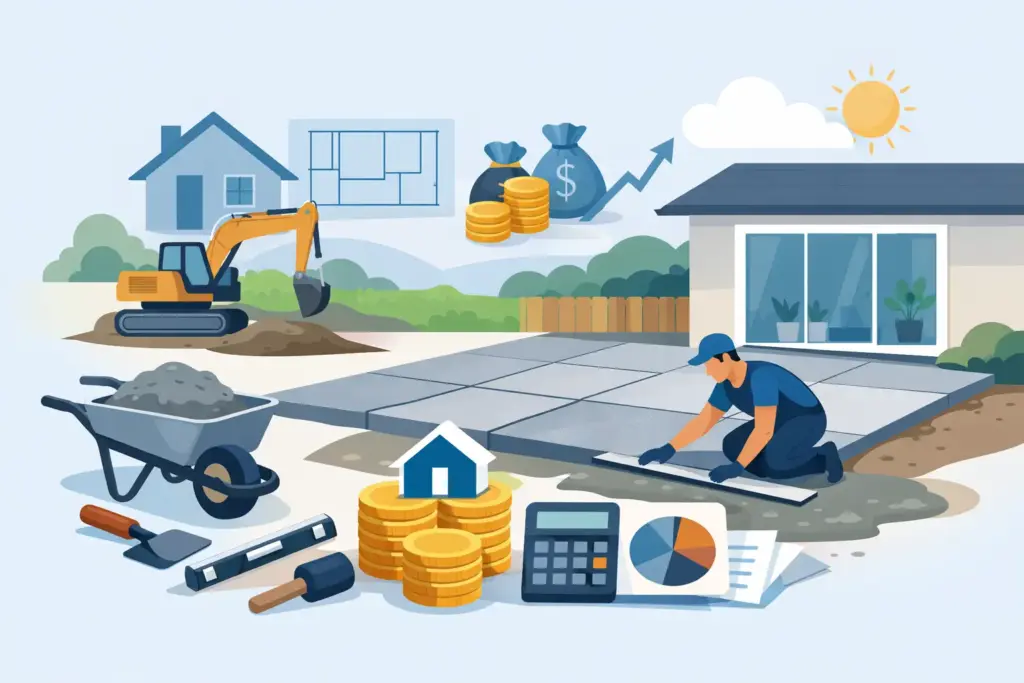
A patio quote can look simple at first glance, then change fast once the real site conditions come into view. That is why concrete patio installation cost is never just about square footage. The final number depends on the shape of the patio, the condition of the ground, the finish you want, and whether the crew is installing a basic slab or building a long-term outdoor surface that will hold up well.
For most homeowners, the real question is not just, “What does a concrete patio cost?” It is, “What am I getting for that price?” A well-installed patio adds usable outdoor space, improves appearance, and protects your investment. A cheap install that skips base prep, reinforcement, or proper finishing can crack early, drain poorly, and cost more to fix than it would have cost to do right the first time.
What drives concrete patio installation cost?
The biggest cost factor is usually size, but size alone does not tell the whole story. A small patio can cost more per square foot than a larger one because fixed labor, equipment, forming, and delivery costs still apply. If the crew has to mobilize, excavate, grade, form, pour, finish, and clean up, the job has a baseline cost even before decorative upgrades enter the picture.
Thickness matters too. A standard residential patio may not need the same build as a driveway, but it still needs to match the use of the space and the soil conditions underneath. If a patio will support heavy outdoor kitchens, hot tubs, or masonry features, that changes the structure and the cost.
Access is another major variable. If concrete trucks can get close to the site, the install is more efficient. If the crew needs to wheel material into a backyard through a narrow gate or work around landscaping, fences, or existing structures, labor goes up. Homeowners often overlook this part until they see two quotes with very different numbers.
Typical price ranges homeowners should expect
In broad terms, a basic broom-finished concrete patio often falls at the lower end of the price range, while stamped, colored, saw-cut, or custom-shaped patios land higher. Exact pricing varies by market, site, and design, but homeowners should expect a meaningful difference between plain utility concrete and decorative work.
A straightforward patio with easy access, standard excavation, and a simple finish will cost less than a custom installation with curves, borders, integral color, sealing, and drainage work. If an old patio has to be demolished and hauled away first, that adds another layer of labor and disposal cost.
This is where comparing estimates carefully matters. One quote may include demolition, compacted base, reinforcement, control joints, and sealing. Another may leave out half of that. The lower number can be tempting, but if scope is not equal, the comparison is not honest.
Basic finish vs. decorative finish
A broom finish is practical, clean, and slip-resistant. It is the right fit for many homes because it keeps cost under control while still delivering a durable surface. If your goal is function, neat appearance, and long service life, this is often the best value.
Stamped concrete costs more because it adds labor, materials, timing control, and finishing skill. Color can be added through integral mix, hardeners, or stains, and each method affects cost differently. Decorative concrete can look excellent when it is done correctly, but it needs proper installation from the ground up. A decorative surface over weak prep is still a weak patio.
Shape and layout
A square or rectangular patio is more efficient to form and finish. Curves, steps, seat walls, built-in edges, and multiple sections increase labor and layout time. Even if the total square footage stays the same, a more complex design usually raises the total project cost.
That does not mean custom work is a bad investment. It just means design flexibility has a real labor cost behind it. A patio that fits the property properly can improve flow, drainage, and curb appeal far better than a basic slab dropped into place without planning.
Site preparation can change the number quickly
The most overlooked part of concrete patio installation cost is what happens before the concrete arrives. Good site prep is what gives the patio a fighting chance to stay level, drain properly, and resist premature cracking.
If the ground is soft, uneven, or poorly compacted, it may need excavation and a new base. If water already collects near the house, the grade may need correction before the patio is poured. If tree roots, buried debris, or old construction material are in the way, removal takes time. None of this is flashy, but it is the part that protects the finished product.
Drainage is especially important. A patio should direct water away from the home, not trap it against the foundation or create icy low spots in winter. Homeowners sometimes focus on color and stamp pattern before addressing slope, but drainage mistakes are what cause long-term headaches.
Removal of existing concrete or old patio materials
If there is already a patio in place, demolition and disposal need to be factored into the estimate. Breaking up and hauling away old concrete is labor-intensive, and disposal fees are real. The same goes for removing pavers, brick, rotted wood structures, or failed base material.
This part of the job can also reveal hidden issues. Once the old surface is removed, contractors may find poor compaction, voids, excess moisture, or edges that need rebuilding. That is why experienced contractors avoid giving unrealistically firm numbers before seeing the site.
Labor, materials, and reinforcement
Material pricing affects every concrete project, but labor quality is what often separates a patio that lasts from one that disappoints. Proper forming, grading, reinforcement placement, finishing, control joints, curing, and cleanup all take skilled hands. A patio may look simple when it is finished, but getting it right is not simple work.
Reinforcement can include wire mesh, rebar, or fiber, depending on the job. The right choice depends on patio size, thickness, load, and subgrade conditions. Reinforcement does not make concrete crack-proof, but it helps control movement and supports overall performance when paired with proper joints and base prep.
Edge detail also matters. Clean edges improve appearance and durability. If the patio ties into steps, walkways, a porch, or masonry work, transitions need to be planned carefully so the whole area feels intentional and performs well.
Why one estimate may be much lower than another
If one contractor is far below the rest, there is usually a reason. Sometimes it is a smaller scope. Sometimes it means less excavation, thinner concrete, weaker base prep, less reinforcement, or rushed finishing. Homeowners should ask what is included, what is excluded, and how the patio will be built from start to finish.
A professional estimate should explain the surface type, thickness, prep, removal if needed, reinforcement, joints, and finish. It should also make clear whether sealing is included and whether the work is backed by a workmanship warranty. That kind of clarity protects both the homeowner and the contractor.
Price matters, but value matters more. A patio is not just a slab of concrete. It is part of your property, your drainage pattern, and your outdoor living space. Paying for careful installation usually costs less than paying for avoidable repairs later.
How to budget for a patio without surprises
The best way to budget is to decide early what matters most. If you want a clean, durable patio and are less concerned with decorative effects, say that up front. If appearance is a priority and you want stamped concrete or custom borders, build that into the discussion from the beginning.
It also helps to allow room in the budget for site-related adjustments. No homeowner likes change orders, but hidden site conditions are common in exterior construction. A realistic budget leaves space for the things that only become visible once the work begins.
When reviewing proposals, ask practical questions. How will water drain? What base will be installed? How thick will the patio be? Will existing materials be removed and hauled away? What finish is included? These details tell you much more than the total alone.
For homeowners who want the work done properly, the goal is not finding the cheapest concrete patio installation cost. The goal is getting a fair price for a patio that is built to last, looks right with the home, and does not create problems down the road. That is the difference between buying concrete and investing in skilled workmanship.
A patio should give you confidence every time you step outside. If the estimate is clear, the prep is solid, and the finish is handled by experienced hands, you are far more likely to end up with a surface that adds value instead of future repair bills.