7 Best Masonry Upgrades for Curb Appeal
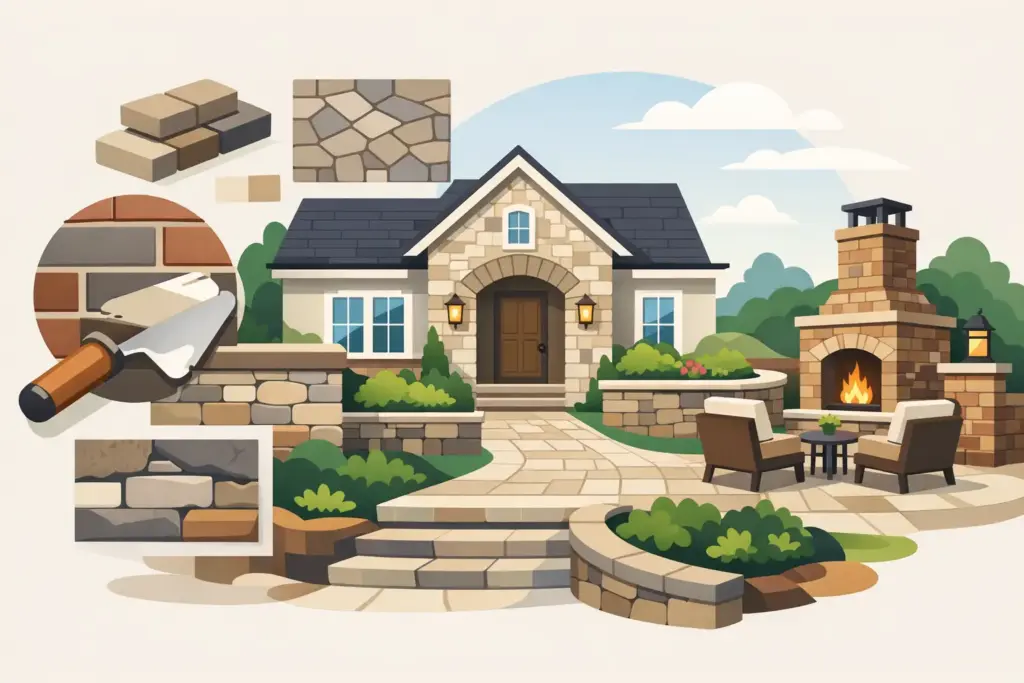
A tired front entry usually shows up in the same places - cracked walkways, worn steps, faded brick, and surfaces that make the whole property feel older than it is. The best masonry upgrades for curb appeal fix that fast because they improve what people notice first: the approach to the house, the condition of the exterior, and the overall sense that the home is well cared for.
Good curb appeal is not just about decoration. It is about clean lines, safe access, durable materials, and finishes that still look right years from now. When masonry work is done well, it adds visual weight and structure to the property while solving problems that tend to get worse if they are ignored.
What makes a masonry upgrade worth doing
The best exterior improvements do two jobs at once. They make the home look better, and they correct wear that affects safety or long-term value. That is why masonry often outperforms quick cosmetic fixes. Replacing spalled concrete, rebuilding loose steps, or repairing deteriorated brick gives you a visible improvement and a practical one.
It also matters where the upgrade sits. The areas with the highest curb-appeal impact are the driveway edge, front walkway, porch, steps, retaining walls, and the front-facing masonry on the house itself. If your budget is limited, start where guests and buyers naturally look first.
Best masonry upgrades for curb appeal that homeowners notice right away
1. Replace a cracked or uneven front walkway
A front walkway sets the tone before anyone reaches the door. If it is cracked, settled, or patched multiple times, it makes the property feel neglected. A new concrete or masonry walkway gives the entrance a cleaner, more intentional look and removes a common safety issue at the same time.
This is one of the strongest upgrades for homeowners who want immediate visual change without taking on a full exterior renovation. Straight, properly formed edges and a finish that matches the style of the house can make even a modest front yard look more polished. If you want more character, decorative concrete or a bordered walkway can add detail without becoming too busy.
The trade-off is that design matters. A highly decorative pattern may look great on one house and out of place on another. In most neighborhoods, the safest choice is a finish that looks custom but still fits the architecture of the home.
2. Rebuild worn porch steps or front stairs
Front steps do more than connect grade to the door. They frame the entrance. If they are chipped, leaning, too narrow, or visibly patched, they pull attention away from everything else.
Rebuilding masonry steps can dramatically improve curb appeal because the front entry becomes stronger and more balanced. It also improves safety, especially if the existing rise and run feel awkward or if the treads are deteriorating. Concrete steps with brick or stone facing are a popular option because they combine structural strength with a finished appearance.
This is also a place where proportion matters. Oversized steps can overpower a smaller home, while undersized steps make the entrance feel weak. A contractor who understands both structure and appearance can help get that balance right.
3. Upgrade the front porch with concrete or masonry finishes
If the porch slab is stained, cracked, or badly worn, it can age the whole facade. Resurfacing or replacing the porch with new concrete, stone, or brick accents can make the house feel newer without changing its character.
For some homes, a clean broom-finished concrete porch is the right move because it looks sharp and holds up well. For others, a stamped or decorative concrete finish adds the extra detail needed to tie the porch into the driveway, steps, or walkway. The best result is usually the one that feels consistent with the rest of the exterior rather than trying to stand out on its own.
A porch upgrade is especially worthwhile when the front entry lacks definition. Adding masonry borders, pillars, or coordinated step finishes can give the entrance more presence from the street.
4. Install veneer stone on key front-facing areas
Stone veneer can add depth, texture, and a more custom appearance to the front of the home. Used in the right places, it gives the exterior a higher-end finish without requiring a full rebuild of the facade.
The key is restraint. Stone veneer works best when it highlights architectural features like porch columns, lower front walls, entry surrounds, or a section of the facade that needs stronger visual grounding. Covering too much can make the front of the house feel heavy or overly busy.
Color selection matters just as much as placement. A stone that clashes with the roof, siding, or brick can hurt curb appeal instead of helping it. Neutral, natural-looking blends usually hold up best over time because they age well and appeal to more buyers.
5. Repair and repoint aging brick
Not every curb-appeal project needs to be a full replacement. Sometimes the smartest move is to restore what is already there. If your home has brick that looks tired because the mortar joints are eroding, repointing can clean up the appearance and protect the wall from deeper moisture damage.
Brick repair also matters when individual bricks are cracked, loose, or spalling. Those defects are easy to spot from the street, especially near the front steps, porch, chimney, or foundation line. Correcting them gives the exterior a more solid, maintained look.
This is one of the most overlooked upgrades because homeowners often focus on paint, landscaping, or lighting first. But when the masonry itself is failing, cosmetic improvements around it will not have the same effect. Solid brickwork reads as permanence, and buyers notice that even if they cannot name the repair.
6. Add or rebuild a small retaining wall
A low retaining wall near the front walk, driveway, or garden bed can sharpen the entire layout of the property. It creates definition, controls grade changes, and gives the front yard a more finished structure.
This upgrade works especially well on sloped lots or homes where the front landscaping looks uneven and hard to maintain. A clean masonry wall can make planting beds look intentional instead of improvised. It also helps the hardscape and softscape work together rather than competing for attention.
The best retaining walls for curb appeal are usually modest in height and simple in design. Their job is to support the look of the property, not dominate it. Material choice matters here too. The wall should relate to the home, the steps, or the walkway so the front exterior feels connected.
7. Refresh the driveway border or apron
A full driveway replacement can be a major investment, but the front edge of the driveway often carries more visual weight than people realize. If the apron is broken down, cracked, or crumbling near the street or garage, the property can look rough even when the house is in good shape.
Repairing or replacing the driveway apron, adding a defined border, or coordinating it with nearby walkways can tighten up the whole front elevation. This is one of the best masonry upgrades for curb appeal when the driveway is structurally sound overall but visibly worn at the edges.
There is a practical side to this too. Driveway edges and aprons take stress from vehicles, water, and seasonal movement. Fixing them early can help prevent more widespread damage later.
How to choose the right upgrade for your home
The right project depends on what is currently hurting the appearance of the property most. If people see damaged access points first, start with the steps or walkway. If the house itself looks worn, focus on brick repair, repointing, or veneer stone accents. If the lot lacks definition, a porch improvement or retaining wall may give you the biggest change.
Budget should guide scope, not quality. It is usually better to complete one visible upgrade properly than spread the budget too thin across several partial fixes. Well-built masonry should look good on day one and still perform years later.
It also helps to think about maintenance and weather exposure. Decorative finishes can look excellent, but only if they are suited to the location and installed correctly. Simpler materials often give the best long-term value when they match the home and are built with solid workmanship.
Why workmanship matters more than trends
Curb appeal improvements fail when they are treated like surface-level decoration. Masonry is exposed to foot traffic, moisture, freeze-thaw movement, and settlement. If the base work, forming, drainage, or mortar repair is not done properly, the nice appearance does not last.
That is why homeowners looking at exterior upgrades should pay attention to execution as much as design. A clean finish, proper alignment, sound structure, and materials that suit the property will always outperform trend-driven choices that are installed poorly. Sampson Concrete & Masonry approaches these projects with that in mind - build it right, make it look right, and make sure it lasts.
The front of your home does not need a full makeover to look stronger, cleaner, and more valuable. Often the biggest difference comes from fixing the hard surfaces you use every day and giving the entry the kind of structure that makes the whole property feel cared for.