When Is Concrete Resurfacing Worth It?
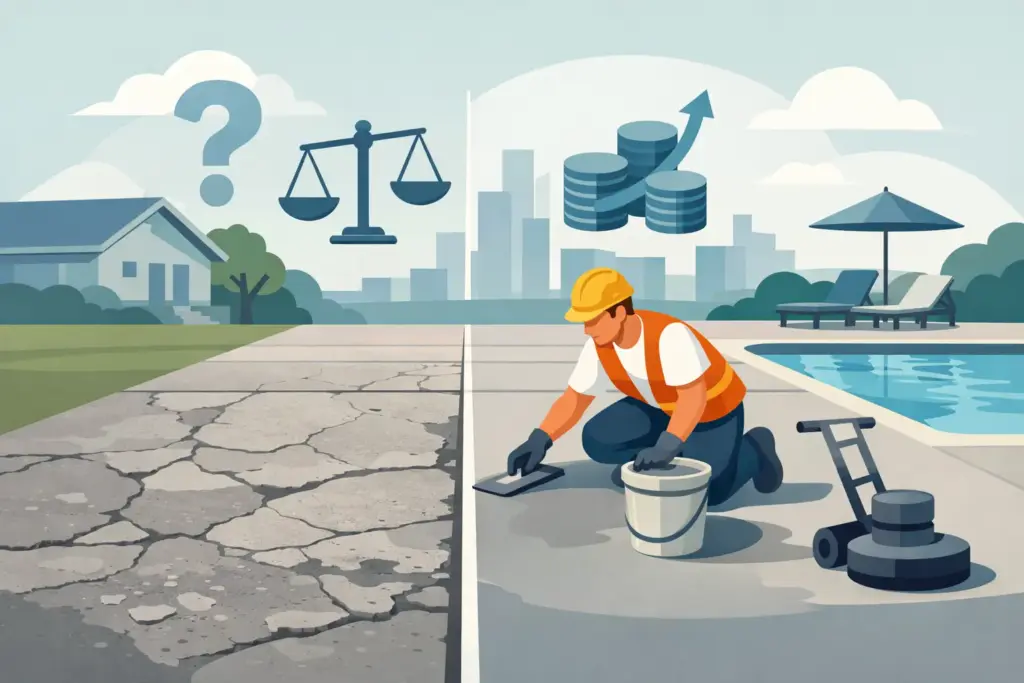
A driveway can look worn out long before it is actually worn through. The surface may be stained, lightly cracked, chipped at the edges, or just dated enough to drag down the look of the whole property. That is usually when homeowners start asking, when is concrete resurfacing worth it? The honest answer is simple: resurfacing is worth it when the slab underneath is still sound and you want a stronger, cleaner finish without paying for full replacement.
Resurfacing can be a smart middle ground. It improves appearance, extends service life, and gives older concrete a fresh, more uniform finish. But it is not a fix for every concrete problem. If the base is failing, if cracks are active, or if sections are sinking, resurfacing can cover the symptoms for a while without solving the cause.
When is concrete resurfacing worth it for homeowners?
Concrete resurfacing makes the most sense when the existing slab is structurally stable but the top layer has seen better days. That includes cosmetic wear, shallow surface scaling, minor pitting, discoloration, and hairline cracking that is not tied to movement or settlement.
For many homeowners, the biggest reason to resurface is value. If a patio, sidewalk, porch, or driveway still has a good foundation, tearing it out can be unnecessary. Resurfacing lets you improve the look and function of the area at a lower cost than replacement, while also avoiding the mess and time that comes with demolition.
It is also worth considering when you want a decorative upgrade. A resurfaced slab can be finished in ways that give a plain concrete area a more refined appearance. That matters when curb appeal is part of the goal, especially at the front of the house where the driveway, stairs, or walkway create the first impression.
Signs your concrete is a good candidate
A good resurfacing job starts with a slab that is still doing its job. The concrete should be largely level, reasonably intact, and free from major structural failure. Small cracks can often be addressed during surface prep, but wide cracks, shifting sections, or recurring movement usually point to a deeper issue.
If water drains properly and the slab is not sinking in sections, that is another positive sign. Surface wear is one thing. A failing base is another. Resurfacing bonds to the existing slab, so the condition underneath matters just as much as the finish on top.
You are probably in resurfacing territory if your concrete has:
- Surface stains from oil, rust, or weathering
- Minor flaking or scaling at the top layer
- Hairline cracks that are stable
- A rough, aged appearance that lowers curb appeal
- Good overall shape with no major settling or heaving
In these cases, resurfacing can restore the look of the slab and add years of useful life.
When resurfacing is not worth it
There are times when replacement is the better investment. If concrete is badly cracked through the full depth, if pieces are breaking apart, or if one side of the slab has dropped, resurfacing will not correct the real problem. It may make the area look better at first, but the damage underneath will usually show back up.
The same goes for concrete that has drainage issues, frost movement, poor sub-base support, or repeated freeze-thaw damage. Surface products are not meant to hold together a slab that is already failing structurally.
This is where homeowners sometimes lose money. They choose the cheaper option up front, only to pay again when the resurfaced surface cracks, lifts, or separates because the original concrete was not a solid base. A dependable contractor will tell you when resurfacing is not the right call.
Cost matters, but so does lifespan
One reason resurfacing gets attention is price. In many cases, resurfacing costs less than tearing out and replacing the slab. That can make it appealing for larger areas like driveways or long walkways.
But worth is not just about the lower estimate. It is about how long the result will last and whether it addresses the actual condition of the concrete. A quality resurfacing job on a stable slab can be a strong value. A resurfacing job on damaged, shifting concrete is usually short-term money spent on a long-term problem.
Homeowners should think about three things at the same time: current condition, expected lifespan, and the importance of appearance. If your slab is still strong and you want a cleaner finish for years to come, resurfacing can be a practical investment. If the slab is already failing, replacement is often the more cost-effective choice over time.
What resurfacing can improve
Resurfacing does more than cover up old concrete. Done properly, it creates a renewed wearing surface that can improve both appearance and day-to-day performance. It can help smooth rough areas, refresh color, and give worn concrete a more consistent texture.
It can also make outdoor spaces feel more finished. A front walkway with patchy discoloration or a backyard patio with surface wear can pull down the overall look of a property. A resurfaced finish can tighten that up without the expense of full reconstruction.
For homeowners planning to stay in the house, that means a better-looking surface they actually enjoy using. For those thinking about resale, it can support curb appeal in a visible and practical way.
Surface prep decides the outcome
The success of resurfacing depends heavily on prep. This is not a shortcut service if it is done right. The slab has to be cleaned thoroughly, weak material has to be removed, cracks and damaged areas need proper attention, and the surface must be prepared so the new layer bonds correctly.
That is why craftsmanship matters. A resurfaced slab should not just look better on day one. It should hold up through weather, foot traffic, and regular use. Poor prep is one of the biggest reasons resurfacing jobs fail early.
An experienced contractor will look past the surface stains and check for the things that actually matter - movement, drainage, depth of damage, edge condition, and whether the slab is still structurally reliable. That evaluation is what tells you whether resurfacing is worth doing at all.
Driveways, patios, porches, and walkways all vary
Not every slab ages the same way. A backyard patio may be a better resurfacing candidate than a driveway simply because it carries less weight. A front porch may need cosmetic improvement but also have edge damage from years of exposure. Walkways often deal with water runoff and winter wear, which can affect whether resurfacing will last.
That is why the right answer depends on the location and use of the concrete. A driveway with widespread surface wear but solid structure may be worth resurfacing. A porch with deep cracking near the steps may need more than a new top layer. A walkway that has become uneven can create a safety issue that resurfacing alone will not fix.
There is no one-size-fits-all answer. The condition of the slab and the demands placed on it should guide the decision.
When is concrete resurfacing worth it compared to replacement?
If the slab is basically sound, resurfacing is often worth it because it improves appearance and service life without the cost of starting over. If the concrete has real structural problems, replacement is worth it because it fixes the problem at the source.
That trade-off matters. Resurfacing is about restoring a usable slab. Replacement is about rebuilding a failed one. Mixing those two ideas is where homeowners get frustrated.
A good contractor should explain the difference clearly. You should know whether you are paying for a cosmetic and protective upgrade or a full solution to structural damage. Honest guidance saves time, money, and repeat repairs.
At Sampson Concrete & Masonry, that kind of practical advice is part of the job. Homeowners do not need a sales pitch. They need a clear assessment of what will last.
The real question to ask before you decide
Instead of only asking how much resurfacing costs, ask what condition the slab is in and what result you expect from the work. If you want to refresh a solid surface and improve the look of your property, resurfacing can be a smart investment. If you need to correct sinking, major cracking, or structural breakdown, it usually is not enough.
The best concrete work protects both appearance and performance. A surface should look clean, feel solid, and hold up under real use. If resurfacing can deliver that on your existing slab, it is money well spent. If not, the better move is to fix the problem properly now rather than cover it and deal with it again later.
A fresh surface is only worth it when the concrete under it still has the strength to support it.