Stone Veneer Installation Done Right
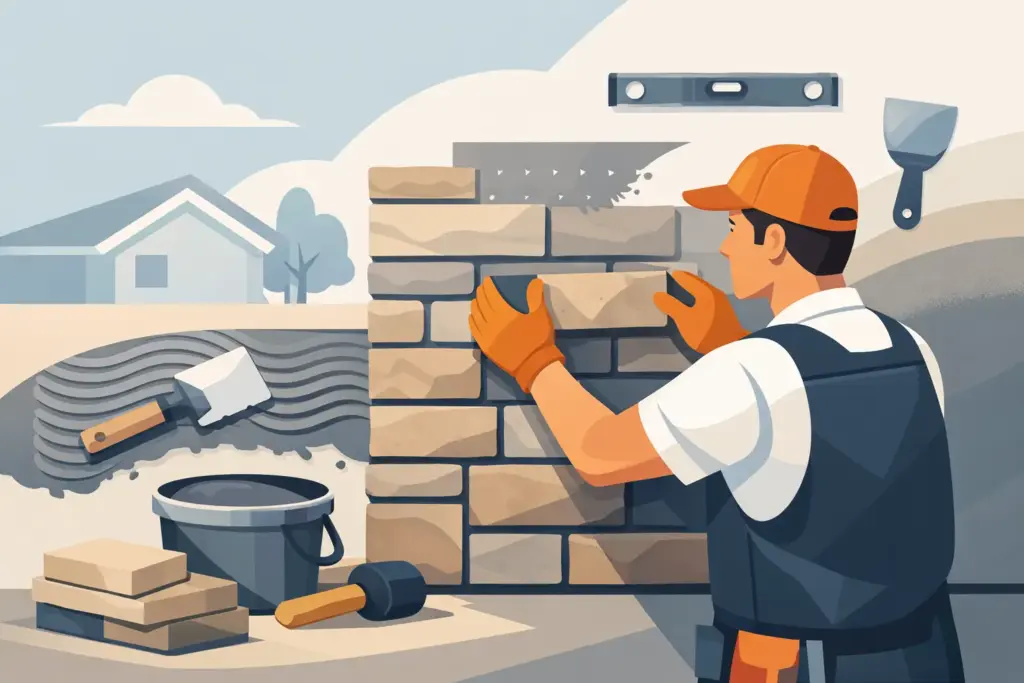
A stone front, entryway, or fireplace wall can make a house look finished in a way paint and siding usually cannot. But stone veneer installation is not just about appearance. If the layout is off, the base is weak, or the mortar work is rushed, that clean upscale look can turn into cracking, loose pieces, water issues, and a repair bill no homeowner wants.
That is why this kind of work needs to be treated like real masonry, not a quick cosmetic upgrade. Done properly, stone veneer adds depth, texture, and value while holding up through weather, temperature changes, and daily wear. Done poorly, it shows fast.
What stone veneer installation actually involves
Stone veneer is a surface-applied masonry product designed to give the look of full-thickness stone without the same weight and structural demand. It can be manufactured stone or natural thin stone, and each has its place depending on the surface, design goal, and budget.
For homeowners, the key thing to understand is that veneer is only as strong as the system behind it. The visible stone is the finish. The real performance comes from what is underneath - the substrate, moisture management, mortar bond, flashing details, and installation method.
On an exterior wall, for example, the process may involve surface prep, a weather-resistive barrier, metal lath, scratch coat, setting bed, and joint finishing. On a masonry surface, the preparation may look different. On an interior fireplace or accent wall, moisture exposure is lower, but surface stability still matters. There is no one-size-fits-all method if the goal is long-term performance.
Where stone veneer makes the biggest impact
Most homeowners think first about curb appeal, and that makes sense. Veneer stone can completely change the look of a front entry, porch skirt, column, foundation face, or exterior facade. It adds contrast, breaks up plain surfaces, and gives the home a more substantial look.
It also works well in smaller areas where a full exterior remodel is not necessary. A front step surround, garage face accent, outdoor kitchen base, retaining feature, or chimney section can all benefit from a properly designed veneer finish. Inside the home, fireplace surrounds and feature walls are common choices because they create texture without taking up space.
The best results usually come from using stone where it makes architectural sense. Covering every surface can feel heavy. Using it strategically often gives a cleaner, more balanced finish.
Why preparation matters more than homeowners expect
A lot of installation problems start before the first stone is ever placed. If the surface is dirty, weak, uneven, or not suited for direct application, the bond can fail. If water is allowed behind the veneer without proper drainage planning, moisture damage can follow.
This is where experienced masonry work makes the difference. A contractor should be looking at the condition of the wall, the material below, how corners will be handled, where transitions occur, and how the installation will deal with movement and exposure. Those details are not extras. They are what separate a lasting job from one that looks good for a season and then starts to break down.
Even layout matters. Stone should not look random in a careless way. Good veneer work has balance. Corners should tie in naturally, joint spacing should stay controlled, and the pattern should feel intentional across the whole wall.
Stone veneer installation on exterior surfaces
Exterior veneer has to do more than look good. It has to hold up against rain, freeze-thaw cycles, sunlight, and shifting temperatures. That means the installation has to protect against moisture intrusion while maintaining a secure bond over time.
The exact system depends on the wall type. Wood-framed walls need a different assembly than concrete block or poured concrete. Some surfaces require lath and scratch coat. Others may be suitable for direct bond with the right preparation. This is one of those areas where shortcuts usually show up later as loose stone, staining, or cracked joints.
The design should also account for transitions at windows, doors, corners, and grade lines. These are common failure points when details are ignored. A professional approach treats those areas carefully so the finished wall does not just look solid - it performs like it should.
Interior stone veneer installation has its own demands
Interior applications are generally more forgiving, but they still need proper planning. A fireplace wall, basement feature wall, or entry accent surface needs a stable base and a clean layout. If the substrate flexes or the stone is stacked without thought to pattern and fit, the finished product can look uneven and amateur.
Weight is also part of the conversation. Not every wall is ready to receive masonry products without review. In some cases, reinforcement or additional prep is needed, especially on large feature sections.
The benefit of interior veneer is that it delivers a strong visual upgrade without a full structural rebuild. It brings warmth, texture, and definition to spaces that otherwise feel flat. But just like exterior work, the finish only looks high-end when the execution is clean.
Choosing between natural and manufactured veneer
This comes down to appearance, cost, and application. Natural thin stone offers authentic variation in color, shape, and surface texture. It is often the choice for homeowners who want a more traditional or premium masonry look. Manufactured stone can provide a consistent style and a wider range of design options while often being more budget-friendly.
Neither option is automatically better. It depends on the house, the location of the installation, and the look you are after. Some homeowners want a rugged, irregular finish. Others want a tighter, more refined pattern. The right contractor should be able to explain what fits the project rather than pushing one material across every job.
Common problems caused by poor installation
When veneer work is rushed, the issues are usually easy to spot. Stones may not sit flush. Mortar joints may vary too much. Corners can look fake or forced. Over time, more serious problems can appear, including cracking, movement, water penetration, and pieces separating from the surface.
Improper mortar selection is another issue. So is poor mixing, weak coverage on the back of the stone, or setting material on surfaces that were never prepared correctly. On exterior work, missing or poorly handled moisture barriers can create bigger damage behind the finish.
Homeowners sometimes assume veneer is a simple decorative layer. In reality, it is a system. If one part of that system is wrong, the appearance and durability both suffer.
What to expect from a professional masonry contractor
A proper installation starts with an honest assessment of the surface, the environment, and the design goal. Not every wall is ready for veneer without prep, and not every stone style fits every home. Good contractors explain the scope clearly, including whether repairs, reinforcement, or moisture-control work should happen first.
You should also expect careful layout, consistent joint work, clean cuts, and solid corner treatment. The finished stone should feel integrated with the house, not applied as an afterthought. Attention to detail matters here because veneer is installed one piece at a time. There is no hiding sloppy workmanship once the wall is complete.
This is also where value shows up. A lower price can look attractive at the estimate stage, but if the install fails early or the finish looks uneven, the savings disappear quickly. Quality masonry work protects both the surface and the investment behind it.
When stone veneer is worth the investment
Stone veneer is worth it when the goal is lasting visual improvement backed by proper construction. It can elevate a plain entry, strengthen curb appeal before resale, upgrade an aging fireplace wall, or help tie together a broader exterior renovation. It gives a home a more finished, substantial look without the cost and structural demands of full-bed stone.
It may not be the right choice for every surface or every budget. Sometimes repair work or base reconstruction should come first. In other cases, a smaller veneer section gives better value than wrapping an entire facade. That is why project planning matters. The best results come from matching the material and installation method to the actual condition of the property.
At Sampson Concrete & Masonry, that is how we approach veneer work - with a focus on sound prep, clean execution, and a finished result that looks sharp and holds up. If you are thinking about adding stone to your home, the smartest first step is to treat it like real masonry from day one.