Repointing vs Brick Replacement: Which Fix Fits?
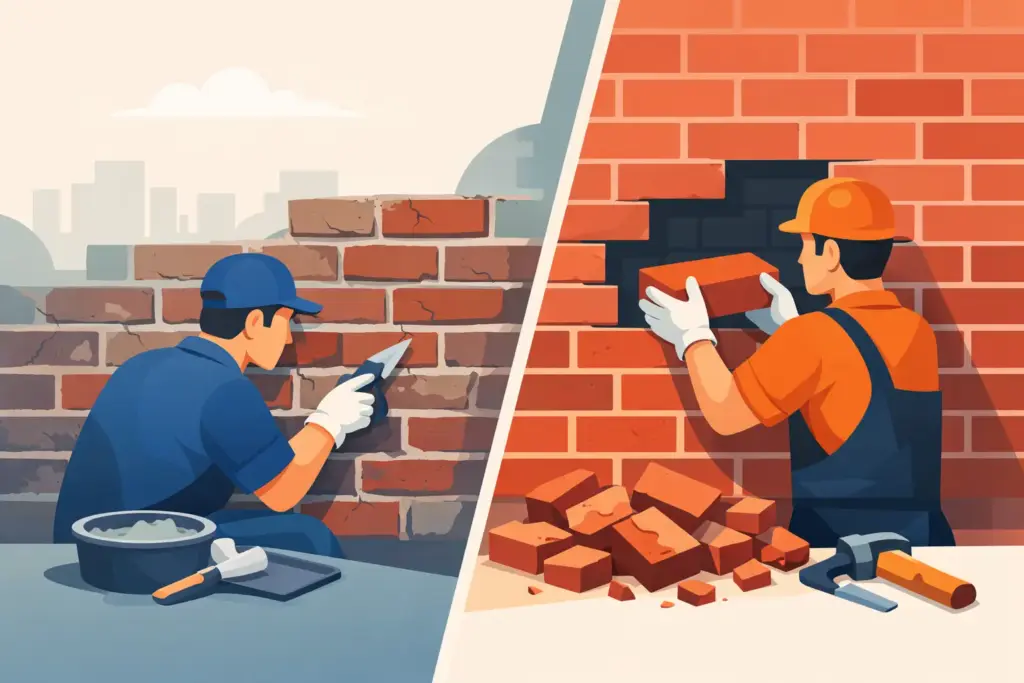
When brick starts flaking, joints begin to crumble, or a wall suddenly looks tired and uneven, the real question is not whether you need masonry repair. It is whether repointing vs brick replacement is the right fix for the condition in front of you. Choosing correctly matters because the wrong repair can waste money, leave hidden damage behind, and shorten the life of the wall.
For homeowners, the difference usually comes down to this: repointing restores failing mortar joints, while brick replacement removes and installs new brick where the units themselves have broken down. They are not competing repairs in every case. Sometimes one is clearly the better option. Sometimes a project needs both.
Repointing vs brick replacement: the basic difference
Repointing is the process of removing deteriorated mortar from the joints between bricks and packing in new mortar that matches the wall as closely as possible in strength, profile, and appearance. The goal is to restore the bond between the bricks, keep out water, and improve the look of the masonry without replacing sound brick.
Brick replacement is more involved. It means cutting out individual damaged bricks or a larger failed section and installing new units in their place. This is the right approach when the brick face has spalled, cracked through, shifted, or deteriorated beyond what mortar repair can solve.
A simple way to think about it is this: if the brick is still solid but the joints are failing, repointing may be the answer. If the brick itself is no longer sound, replacement is usually the safer long-term repair.
When repointing is the better choice
Repointing makes sense when the wall still has good brick but worn mortar. That often shows up as sandy joints, small gaps, missing sections of mortar, or joints that are recessed farther back than they should be. On older chimneys and exterior walls, this is a common issue because mortar takes weather exposure before the brick does.
This type of repair is often the more cost-effective option because it preserves the existing brickwork. It also helps maintain the original look of the home, which matters when the brick has aged evenly and still has strong visual character.
Repointing is also the right move when water is starting to get into the joints but the damage has not yet spread into the brick units. Catching that stage early can prevent a much larger repair later. A lot of serious masonry failures begin as neglected mortar joints.
That said, repointing only works when the surrounding materials are stable. New mortar cannot fix bricks that are already broken, soft, bulging, or separating from the wall.
Signs your home may need repointing
You may be a good candidate for repointing if you notice mortar cracking in thin lines, joints falling out in pieces, minor leaks around a chimney, or visible gaps that allow moisture penetration. In many cases, the brick still looks mostly intact, but the wall has lost the tight, finished appearance it once had.
If the problem is widespread across the joints but the bricks remain solid to the touch, repointing is often the smarter repair.
When brick replacement is the better choice
Brick replacement becomes necessary when the masonry units themselves have failed. This is common in areas exposed to repeated freeze-thaw cycles, moisture intrusion, poor drainage, or years of deferred maintenance. Once water gets into a brick and expands during freezing, the face can pop off, the corners can break away, and the unit can lose structural strength.
You may also need brick replacement when a wall has settled and certain bricks have cracked under movement, or when previous repair work used mismatched materials that accelerated deterioration.
This repair usually costs more than repointing because it involves careful removal, matching brick selection, and rebuilding affected areas without disturbing surrounding masonry. But when the brick is gone, there is no shortcut around it. Covering damaged brick with fresh mortar does not restore strength.
Signs your home may need brick replacement
Look for bricks that are cracked through the middle, faces that are peeling or flaking off, loose units, deep chipping, or sections that look bowed or shifted. If the brick sounds hollow, feels soft, or visibly holds moisture, that is another warning sign.
Chimneys are a frequent trouble spot. Because they sit fully exposed above the roofline, they take constant weather stress. Once both the mortar and the brick start failing, a chimney repair often needs a mix of repointing and selective replacement.
Why the right diagnosis matters
The biggest mistake property owners make is treating every masonry issue like a mortar problem. Fresh joints can make a wall look cleaner for a short time, but appearance is not the same as structural repair. If the brick is already compromised, the wall will keep breaking down.
The opposite mistake also happens. Some walls are recommended for heavy replacement work when a skilled repointing job would restore performance at a lower cost. That is why a proper site evaluation matters. A dependable contractor should look at brick condition, joint depth, moisture exposure, movement, and the extent of the damage before recommending a repair plan.
This is especially important on older homes. Mortar has to be compatible with the existing brick. If it is too hard, it can trap stress in the brick and cause more damage over time. Good masonry repair is not just about filling gaps. It is about using the right method and materials for the wall you actually have.
Cost, appearance, and long-term value
In a direct comparison, repointing is usually less expensive than brick replacement because labor is focused on the joints rather than the units themselves. It can also preserve the original appearance of the brickwork, which many homeowners prefer.
Brick replacement can cost more up front, especially if matching older brick takes time or if damaged sections are extensive. But if the units are failing, replacement is often the better value because it removes the weak material instead of patching around it.
Appearance is another factor. A well-executed repointing job should blend with the wall and look clean without standing out. A poor one can leave obvious color differences, smeared mortar, and hard lines that take away from curb appeal. The same goes for replacement. New brick has to be matched as closely as possible in size, texture, and color to avoid a patched look.
For long-term property value, the best repair is the one that stops water entry, restores stability, and protects the rest of the structure. That is where experienced workmanship matters more than the cheapest quote.
In many cases, the answer is both
Some masonry projects are not a clean choice between repointing vs brick replacement. A chimney may have mostly sound brick with a few failed units near the crown. A front wall may need repointing across the field of the wall but replacement around a cracked corner. A porch or façade may have isolated spalled bricks caused by water runoff from one bad area.
In those cases, combining both repairs is often the most practical approach. Replace the failed brick, repoint the worn joints, and address the source of moisture if needed. That gives you a repair that looks better, performs better, and holds up longer.
This is where a hands-on masonry contractor brings real value. The goal should not be selling the largest repair possible. The goal should be fixing what is damaged, preserving what is still sound, and making sure the finished work is built to last.
What homeowners should do next
If you are seeing cracking mortar, loose brick, chimney deterioration, or visible surface damage, do not wait for a small issue to turn into structural repair. Masonry problems rarely stay in one place once water gets involved.
A professional inspection can tell you whether the brick is still serviceable, whether the joints have failed, and whether the damage is cosmetic, functional, or structural. From there, the right scope becomes much clearer.
At Sampson Concrete & Masonry, this kind of repair starts with honest evaluation and practical recommendations. Some homes need targeted repointing. Some need selective brick replacement. Some need both to protect the wall and keep the repair looking right.
If your brickwork is showing signs of wear, the best time to address it is before another season of water and freezing temperatures makes the repair larger than it needs to be. A solid wall should look strong because it is strong, not just because it was patched over.