Foundation Repair Options That Actually Last
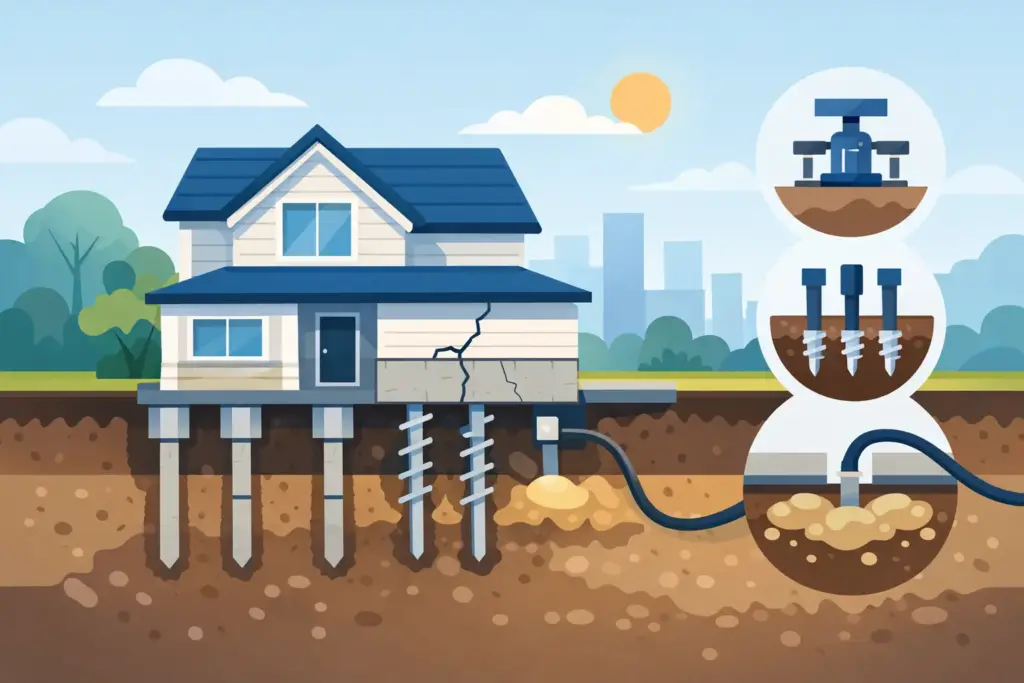
A small crack in a basement wall can look harmless right up until the floor starts sloping, doors stop latching, or water begins finding its way inside after every heavy rain. That is why understanding foundation repair options matters early. The right repair protects the structure, helps prevent larger masonry and concrete damage, and saves homeowners from paying for the same problem twice.
Not every crack means a major structural issue, and not every settling home needs the same solution. A reliable repair starts with the cause. Soil movement, poor drainage, hydrostatic pressure, freeze-thaw cycles, aging materials, and improper original construction can all affect a foundation in different ways. The visible symptom may be similar, but the fix can be very different.
How foundation problems usually show up
Most homeowners first notice the signs inside the house. Windows stick, interior drywall cracks near doors, floors feel uneven, or gaps appear where walls meet ceilings or trim. Outside, the clues often include stair-step cracks in block or brick, bowing foundation walls, crumbling mortar joints, sunken concrete near the home, or water collecting along the perimeter.
Some movement is minor and stable. Some is active and getting worse. That distinction matters. A cosmetic patch over an active structural problem rarely holds up, and it can delay the repair until damage spreads into framing, basement finishes, walkways, porches, or adjacent masonry.
Common foundation repair options for homes
The best foundation repair options depend on whether the issue is cracking, settlement, bowing, water intrusion, or a combination of problems. In many cases, a long-lasting repair includes both structural correction and drainage improvement.
Crack repair for poured concrete walls
If a poured concrete foundation has a non-structural crack or an isolated leaking crack, injection repair is often the first step. Epoxy injections are typically used when structural bonding is needed. Polyurethane injections are commonly used to seal active leaks because the material expands and follows the path of water.
This type of repair works well when the wall is otherwise sound and the crack is limited in scope. It is not the right answer for a wall that is shifting, bowing, or settling. In those cases, sealing the crack may stop water for a while, but it does not correct the movement behind it.
Block wall reinforcement and rebuild work
Block foundations often fail differently than poured concrete. Horizontal cracking, inward bowing, and mortar deterioration are common signs of pressure from saturated soil outside the wall. Depending on the severity, the repair may involve reinforcing the wall, rebuilding a damaged section, or in more advanced cases replacing large portions of the wall.
This is where experience matters. A wall that has moved beyond a certain point may not be a candidate for a simple reinforcement system. If the masonry units are compromised or the wall has lost structural integrity, rebuilding is usually the more honest recommendation.
Underpinning for settlement
When part of a home settles because the soil below can no longer carry the load properly, underpinning may be required. This process transfers the structure to deeper, more stable support. There are several methods, but the goal is the same: stop further settlement and restore dependable bearing capacity.
Underpinning is one of the more serious foundation repair options, and it is not something homeowners should rush into without a clear diagnosis. It tends to cost more than surface-level repairs, but when settlement is active, it is often the repair that actually solves the problem instead of masking it.
Pier systems for sinking foundations
Helical piers and push piers are commonly used when a foundation is dropping or when parts of the structure need to be stabilized. Helical piers are screwed into the ground and are often used in lighter structures or where soil conditions support that approach. Push piers are driven down to load-bearing strata using the weight of the structure.
Both can be effective, but soil conditions, access, foundation type, and load requirements all influence the choice. There is no one-size-fits-all answer. A proper recommendation should be based on site conditions, not a sales script.
Wall anchors and bracing systems
For foundation walls that are bowing inward from lateral soil pressure, wall anchors or bracing systems may be appropriate. These systems are designed to stabilize the wall and, in some cases, gradually improve alignment over time.
They can be a strong option when the wall has not deteriorated too far and there is enough exterior space for anchoring. On tight lots or where exterior access is limited, interior bracing may make more sense. The trade-off is that some systems reduce usable basement space or may require ongoing adjustments.
Drainage correction and waterproofing support
Sometimes the foundation itself is not the only problem. Poor grading, clogged or missing drainage systems, downspout discharge near the house, and water pressure around the foundation can all make a repair fail early if they are not addressed.
That is why drainage work often belongs in the same conversation as foundation repair. Regrading, extending downspouts, improving surface runoff, and correcting areas where water ponds near the structure can reduce future pressure and moisture intrusion. If water is the driver, structural repair without drainage correction is incomplete work.
Choosing the right repair instead of the fastest one
Homeowners understandably want a clear answer fast, but foundation work is one area where a rushed recommendation can get expensive. A patch is cheaper than underpinning. Reinforcement is cheaper than rebuilding. But cheaper only helps if the repair matches the problem.
A fair evaluation should answer a few basic questions. Is the damage cosmetic, structural, or both? Is movement active? Is water contributing to the failure? Has the damage spread into nearby brick, block, stairs, slabs, or basement entries? Once those answers are clear, the repair plan becomes much more reliable.
What affects cost and scope
Foundation repair pricing varies because the scope varies. A single crack injection is very different from stabilizing a settling corner of a home. The size of the affected area, site access, soil conditions, excavation needs, and whether masonry reconstruction is required all influence the cost.
Timing matters too. Small problems are generally less invasive to fix. Once movement leads to wall displacement, repeated leaking, or damaged exterior concrete and masonry, the project often expands. Waiting does not always make a repair impossible, but it usually makes it larger.
When repair is better than replacement
Many homeowners worry that foundation trouble means the whole foundation has to be replaced. In most cases, that is not true. Localized repair is often enough when the issue is identified early and the rest of the structure remains sound. Targeted structural work, crack repair, drainage correction, or partial rebuilds can often restore safety and performance without a full replacement.
The key is honest assessment. Good contractors do not oversell full replacement when a focused repair will do the job. They also do not minimize a failing wall just to win a project at a lower number.
What to look for in a contractor
Foundation work is not just about filling cracks or pouring concrete. It is structural repair, which means the work needs to be thought through carefully and executed cleanly. Look for a contractor who can explain the cause of the damage in plain language, outline the repair method clearly, and talk through what is and is not included.
It also helps to work with a company that understands the surrounding systems. Foundations connect to masonry, drainage, stairs, walkways, basement access points, and exterior concrete. When one area fails, the damage often affects another. A contractor with hands-on experience in structural repair and masonry work can see the full picture instead of treating one symptom in isolation.
At Sampson Concrete & Masonry, that practical approach matters. Homeowners are not looking for guesswork. They want a repair that protects the home, looks clean when finished, and holds up over time.
When to act
If you are seeing recurring cracks, bowing walls, moisture in the basement, or signs that part of your home is settling, it is worth having it looked at before the next season makes it worse. Freeze-thaw cycles, heavy rain, and continued soil movement do not pause because the issue is inconvenient.
The best repair is usually the one done before the damage spreads. A foundation does not need a dramatic failure to deserve attention. If something looks off, treat it seriously, get a qualified assessment, and make the repair based on what the structure actually needs - not just what sounds simplest in the moment.